
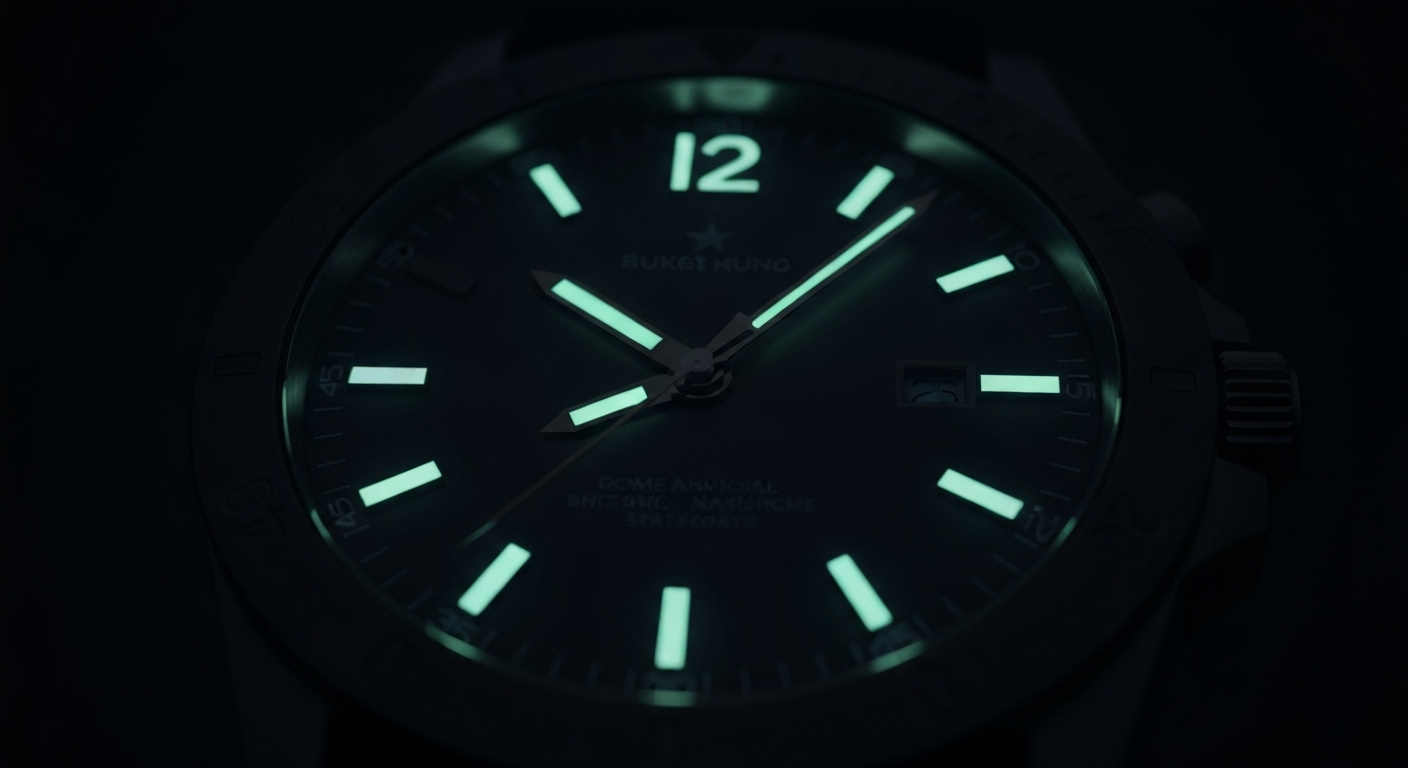
The Science Behind Luminosity in Watches and Its Impact
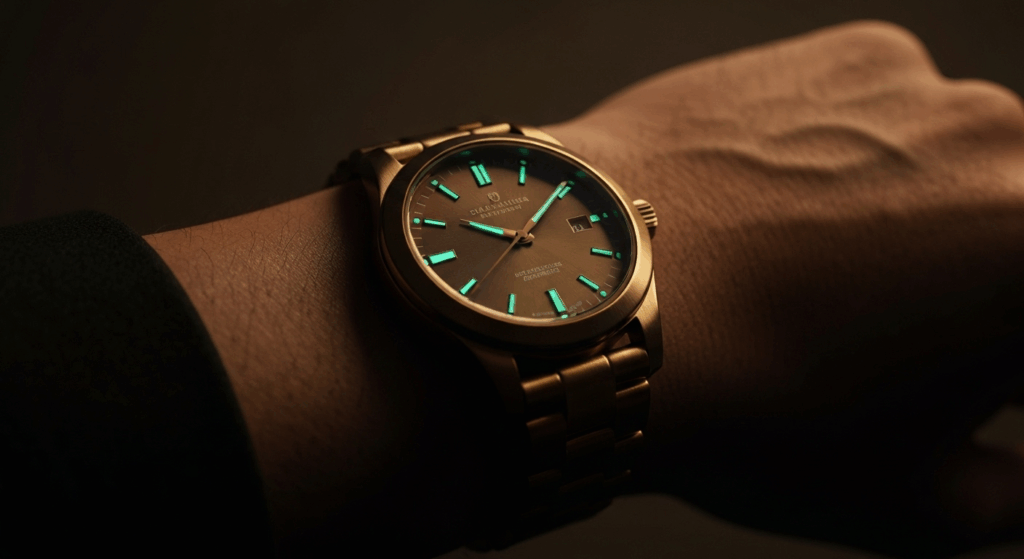
Key Highlights
- Luminosity in watches allows you to read time in the dark, a feature that has evolved significantly over the past century.
- Early luminous watches used radioactive paint containing radium, which posed serious health risks to watchmakers.
- Safer alternatives like tritium, a radioactive isotope of hydrogen, were used before being replaced by non-radioactive materials.
- Modern luminous material, like Super-LumiNova, is non-toxic and works by absorbing and re-emitting light.
- The application and type of luminous paint on watch dials directly impact the brightness and duration of the glow.
Introduction
The way a watch can glow in the dark is more than just a cool trick. It shows a hundred years of work and new ideas in the watch industry. This glow is called luminosity. It is there so you can see the hour markers and watch hands even when there is not much light, like deep in the ocean or in a room with low light. You may ask what makes the hands and hour markers on your watch shine like that. Here, we will talk about the interesting science behind this glow. We will look at how the watch industry has moved from using risky materials to much safer, better ways to get luminosity today.
Understanding Luminosity in Watches
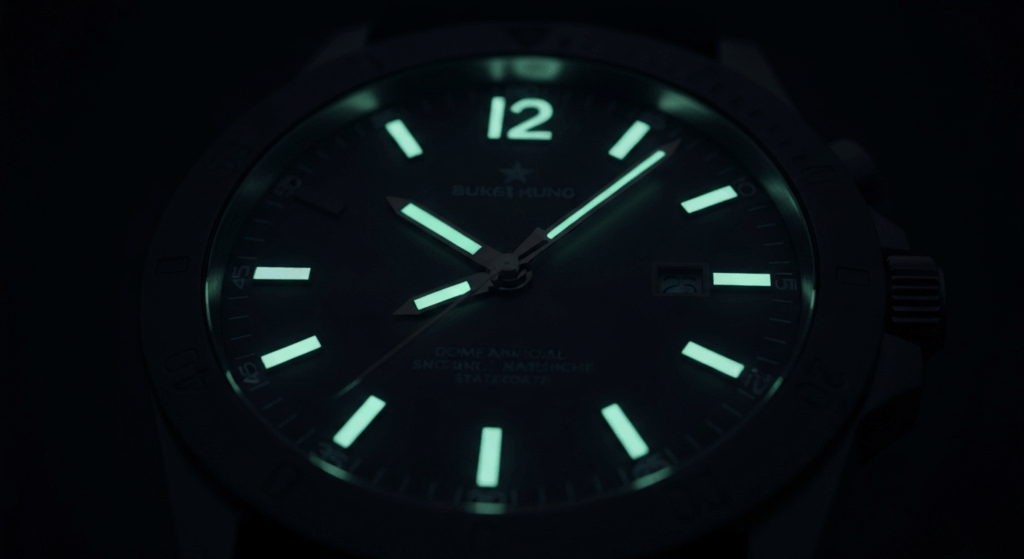
How does this charging and glowing really work? The answer is found in the special chemical makeup of these luminous compounds. We will look into the basic science that allows this to happen. Then, we will see how it is used in real ways to help you see the time with your watch dials and numerals, even when there is no outside light around.
The Basic Science of Watch Luminescence
The glow you see on your watch is possible because of science. It all starts when the watch is exposed to an external light source. This can be sunlight or any artificial light. There is a special material inside your watch called a phosphor.
When that light hits, the phosphor absorbs its energy. This energy makes the electrons in the phosphor jump up to a higher level inside the atom. The change does not happen fast like it does in fluorescence. With luminescence, the release is slow. As the electrons drop back down, they give off energy as small bits of light. We see this light as the glow.
This slow and steady release is why your watch glows after the light source is gone. The brightness and how long the glow lasts depends on the type of phosphor used and how good that phosphor is at storing and letting out the light energy.
How Luminosity Enables Time-Telling in the Dark
The use of luminosity helps your watch stay useful in any light. Watchmakers put luminous material on the most important parts of watch dials. This way, you can see the time right away. When there is no light source, these glowing parts stand out well against the dark dial.
To get this effect, they coat certain spots to help you read the time with ease. The main aim is to make the time markers easy to see. The parts that often get this glow are:
- The watch hands (hour, minute, and sometimes seconds)
- The hour markers or numerals
- Bezel markings, especially on diving watches
- Sub-dial hands or indicators on chronographs
By lighting up these important parts, the watch keeps working well, even at night. The glow from the luminous material lets you see the time no matter how dark it gets around you.
Key Types of Luminous Materials Used in Watches
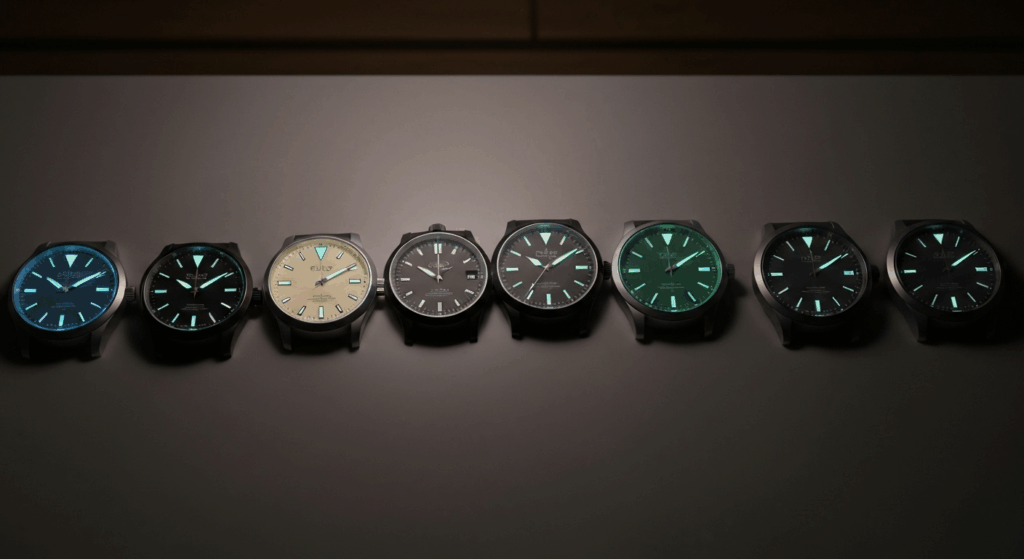
Now, watchmakers use something much better. Modern watches use photoluminescent paints. A big change came with strontium aluminate-based materials like Luminova and Super-LumiNova. These brands made the glow much brighter and last much longer. The best part is there is no radioactivity involved, so it is safe. Here, we will look at these important materials and what makes each one different.
Radium and Its Historical Significance
Radium was the first luminous material that was used in watch dials. People liked it because it could glow for a long time. It has a half-life of over 1,600 years. This radioactive material got mixed into paint, which many called radium paint. Workers then put this paint on watch dials. The dial would glow all the time, even if it had not seen light. But this easy glow came with a big health risk.
The use of radium on watch dials led to a sad story in history. The “Radium Girls” were women who put radium paint on watch dials in factories. Over time, they got very sick from radiation poisoning. This event showed everyone how strong the health risk was when people handled this radioactive material in their work.
Germany’s Federal Office of Radiation Protection (BFS) has said that the main danger was for the watchmakers who worked with radium, not just people who wore the watches. Even now, any old watch with a radium dial will still be radioactive. So, you should always handle these old watch dials with extra care.
Tritium Tubes and Their Characteristics
After people used radium, tritium became a popular new light source. Tritium is a radioactive isotope of hydrogen. It sends out low-energy beta particles. This makes it much safer to use than radium. At first, tritium was put into a paint. But this could be risky. The material could get out of the watch case as time went by.
Today, there is a better and safer way to use tritium. This is called gaseous tritium light sources (GTLS), or tritium tubes. The method uses tiny glass tubes with tritium gas inside. These tubes are coated with a layer of phosphor on the inside. When the beta particles from tritium hit the phosphor, they give off a glow. This glow can last for many years.
This way, you get a steady and reliable glow without having to charge the light source. The glow will keep going for about 12.3 years, but after that, its brightness goes down. Brands such as Ball and Luminox use these tritium tubes. They give great light so people can see even in low light.
Luminova and Super-LumiNova: Modern Innovations
The invention of LumiNova in 1993 by the Japanese company Nemoto & Co. was an important change for the watch industry and luminescence. A man named Kenzo Nemoto made LumiNova using strontium aluminate, which is a type of phosphor that is not toxic and does not have radiation. LumiNova works best when you charge it by an external light source. After it takes in the light, it starts to glow.
Later, Nemoto & Co. and RC Tritec AG, a Swiss company, worked together to form LumiNova AG Switzerland. This partnership gave the watch industry Super-LumiNova, which is a brand of the same material. The “Super” in Super-LumiNova means it is made all in Switzerland. The material acts like a light storage battery. It quickly soaks up light from outside, and then puts out a strong, bright afterglow for a long time.
Super-LumiNova glows about ten times brighter than the old zinc sulfide-based paints. It also comes in many colors and levels of brightness. Because of this, it is now the industry standard. The watch industry uses Super-LumiNova because it gives good performance, does not use radioactive materials, and keeps people safe when they want luminescence in their watches.
Evolution of Watch Luminescence Over Time
The story of luminescence in watches shows how people always want better ways to see the time and keep safe. Watchmaking has come a long way from when watch companies used radium. Back then, they put radium on watch dials to help people read them in the dark, but it was risky.
Over time, things changed. Watchmakers stopped using self-luminous materials like radium. They started to use safe photoluminescent compounds that do not harm people. This long way shows both how technology got better and that people began to know more about the health dangers for the watchmakers and customers.
The Early 20th Century and Radioactive Paints
In the early 1900s, people found out that radium paint could make watch dials glow in the dark. This was a big deal at the time. The watch industry used this radioactive material since it made watches shine on their own. The watch dials and numerals with the paint could be seen at night. This was good for both people in the military and those at home.
But there was a problem in the way these watches were made. In the United States, a group of women called the “Radium Girls” worked in factories to paint the dials. They were told to lick the brushes to make a fine point. This made them swallow dangerous amounts of radium.
Their sad story made people in the country see how harmful radioactive material could be. It helped shine a light on how workers should be kept safe at work. Even after knowing this, people kept using radium in watch dials until it was stopped in 1968.
The Shift to Safer, Non-Radioactive Compounds
When the watch industry found out about the strong health risk of radium, it started to look for safer options. The first choice was to use other, less dangerous radioactive things like promethium and tritium. Still, the best way was to find options that are not radioactive at all, but still glow well.
Things changed when photoluminescent materials came. These use phosphors, like the first zinc sulfide phosphor and the later strontium aluminate. They take in light and then give it off as a glow. This got rid of the need for radioactive parts and made the work safe from the health risk.
Here are the main reasons the watch industry likes these new, non-radioactive compounds:
- Complete Safety: These do not give off radiation and are safe for watchmakers and people who wear the watches.
- High Performance: Modern lumes shine brighter and for more time than older kinds.
- Durability: They keep their glow and can be charged again and again, with no decay, over the life of the watch.
Impact of Technological Advances on Lume Performance
Technological advances have dramatically improved luminous performance in watches. Modern materials like Super-LumiNova are engineered for superior brightness and longevity. Innovations are not just in the chemical composition but also in the application. Some watchmakers apply multiple layers of lume to create a more intense and lasting glow.
Brands have also developed proprietary versions of these materials. For example, Rolex introduced Chromalight, while Seiko uses LumiBrite. These variations often involve different color hues and application techniques designed to maximize visibility. The development of different grades, like Super-LumiNova’s Grade X1, offers even better performance, extending legibility by a factor of 1.6 compared to standard grades.
These advancements give you a bright lume that is both powerful and completely safe. Below is a comparison of some popular Super-LumiNova colors and their relative brightness.
| Name | Color | Relative Brightness |
|---|---|---|
| C3 | Cream / Light Green | 100% |
| BGW9 | White (Glows Blue-Green) | 95% |
| C5 | Mint Green | 89% |
| C7 | Teal | 84% |
| C9 | Pale Turquoise | 83% |
| Dark Blue | Dark Blue | 60% |
| Dark Red | Dark Red | 22% |
Factors Affecting Luminous Performance in Watches
Not all watch lume is the same. There are a few things that affect how well your watch glows. These include how bright it is, how long it stays lit after charging, and what color it is. The glow depends on what material is used for the lume. It also depends on how much of this material is on the watch, and how well it was charged by a light source.
The color of the lume matters a lot when we talk about how bright it looks. You might notice color variations like blue or orange. There is a reason, based in science, why some colors seem brighter than others. Now, let’s look at how all these things work together to make the lume of a watch better or worse.
Color Variations and Their Impact on Brightness
While modern luminescent paint comes in many colors, green is the one you will see the most. That’s because the human eye can see green light better than other colors, especially when it is dark. This makes a green glow look brighter to people, even if other colors give off the same brightness.
The Super-LumiNova C3 shines with a light green color. It is known as the standard for brightness. Some brands, like Rolex, pick other colors like blue for their Chromalight to stand out. Sometimes, blue or orange gets used to make a watch look special or different from others.
These color variations can make a watch glow with style. But, picking colors like blue or orange to set your watch apart may come with less brightness. For example, a red lume does not glow as bright as a green one. The color you choose for your luminescent paint and lume will be about looks and how much brightness you want.
Duration and Intensity of Afterglow in Different Materials
The time and strength of a watch’s glow both depend on the quality and type of luminous material used on the dial. Modern luminous materials, like Super-LumiNova, give a strong glow at first. This bright light gradually gets weaker over a few hours as it uses up its stored energy.
The type of phosphor used is also important. The main material in Super-LumiNova is strontium aluminate. This is much better than the old zinc sulfide phosphors. It lets the dial store and release more light, so the glow is brighter and lasts for a longer time.
But if you use radioluminescent materials, such as tritium tubes, you get a steady glow that stays the same all night. These dials are not as bright right after you charge them, compared to Super-LumiNova. Their brightness will not drop fast overnight. However, the glow from tritium drops for good little by little each year, as the radioactive material naturally fades away. Right after you charge a high-quality photoluminescent dial, it looks the brightest. But if you need a steady, long-lasting glow, tritium tubes are the best choice.
Identifying and Comparing Luminous Dials
Being able to spot different lume types on watch dials can help you know a lot about the watch’s age and how it was made. Watch dials have used many luminous materials over the years. You can see clear signs between them when you look closely. Old radium gives the watch an aged look. Modern limited edition watches have a clean glow. Each lume type has its own style.
When you know these hints, you can enjoy what makes a vintage watch special and see how a new watch offers better glow or more features. Let’s look at some big things you can check to pick out different lume types on watch dials and see how limited edition watches stand out. We’ll also go over how well some of today’s top watches glow compared to the old ones with radium.
Visual Differences Between Lume Types
Spotting how lume types differ gets simple when you know what signs to look for. Old watches with radium on the dials often show a brown shade, which many call patina. This patina gives the watch dials an aged look. The lume might not glow because the phosphor is worn out. Still, radium stays in the dial and is radioactive.
The dial on tritium watches, found by a “T” mark, may turn creamy or kind of yellow as it gets older. Lot of collectors think this color change is good to have. Newer Super-LumiNova and other photoluminescent materials for watch lume keep the original color. Most times, the dials look white or off-white in light, and these do not change or break down.
Here are the main things you can see to tell the difference:
- Radium: You will see a rough, brown tint on the watch dials. The glow is gone, but the dial paint is radioactive.
- Tritium: The dials can turn creamy or yellow. It will glow all the time, but the light is soft and does not need charging.
- Super-LumiNova: The dial looks sharp, clear, and gets put on cleanly (can be white, green, and more). It lights up bright when charged. This glow is green or blue and goes away in a few hours.
- Chromalight: A type
Which Watches Offer the Best Luminous Performance Today?
Several brands are renowned for their exceptional luminous performance in modern watches. Rolex, with its proprietary Chromalight, offers a long-lasting and highly legible blue glow. Seiko is another leader, using its own powerful LumiBrite formula, which is known for its intense brightness and longevity after a short exposure to light.
Other brands, like Panerai and Lum-Tec, are famous for applying very thick layers of Super-LumiNova to achieve an incredibly bright lume. For a different approach, Timex Indiglo uses an electroluminescent panel that illuminates the entire dial at the press of a button, offering a different kind of on-demand brightness.
Ultimately, the “best” luminous performance depends on your needs—whether you prioritize a blindingly bright initial glow or a steady, all-night luminescence. Here’s how some of these popular technologies compare.
| Brand/Technology | Lume Type | Key Characteristic |
|---|---|---|
| Rolex Chromalight | Photoluminescent | Strong, long-lasting blue glow with uniform brightness. |
| Seiko LumiBrite | Photoluminescent | Extremely bright green glow that charges quickly. |
| Panerai Super-LumiNova | Photoluminescent | Often applied in thick layers for exceptional intensity. |
| Ball/Luminox GTLS | Radioluminescent | Constant, steady glow from tritium gas tubes; no charging needed. |
| Timex Indiglo | Electroluminescent | The entire dial lights up with a button press. |
Knowing about the science behind luminosity in watches helps you more than you may think. It is not just about looks. It also makes the watch work better for people. Over the years, the luminous materials used in watches have changed a lot. Radium was used before, but now watches often use new things like Luminova. The switch to safer materials has made watches better for you to use. Things like color variations and how long the watch glows after the lights go out are important. These details help you see the time, even when it’s dark. If you understand luminescence and how it works, you can pick a watch that looks nice but also glows well when you need it. If you want to find the best watch that is stylish and uses new luminescent technology, you can always get in touch for advice!
Frequently Asked Questions
Are older luminous watch materials dangerous to handle or wear?
Yes, old luminescent paint that has radium is a radioactive material. It can be a health risk, especially if you open the watch case. Even though the amount of radiation that a wearer gets is usually low, the main danger was for watchmakers who had to work with radium paint by hand.
What’s the difference between Super-LumiNova and Chromalight?
Super-LumiNova is the most used glowing material in watches. It comes from RC Tritec AG. Rolex has made its own type of this technology, calling it Chromalight. The biggest difference between the two is in the color of the glow. Chromalight gives off a clear blue glow that is easy to spot. Most Super-LumiNova, made by RC Tritec, shines with a green glow. People say the green glow from luminova gets bright quickly at first. Each brand chooses what suits their watches for brightness and style.
Why is green the most common lume color in watches?
Green is the most used lume color in watches. The human eye sees green best when it is dark. Because of this, green phosphor seems brighter than other color variations. It is why the watch industry often uses green. Brands like RC Tritec use luminova and other lumes to get the right amount of brightness on watch dials.
https://www.youtube.com/@redwoodwatches9375
https://www.instagram.com/nixon
https://www.hodinkee.com/articles/let-there-be-light-appreciating-the-execution-of-lume
https://www.youtube.com/channel/UC12incUTvcMPV5dD47guBdw
https://www.thewatchcompany.com/blog/recommended/seiko-62mas-review
https://www.thewatchbox.com/blog/tales-lume-watches.html
Leave a Reply