

The Legacy of Glashütte Luxury Watchmaking: 180 Years Strong

Key Highlights
Here are the key takeaways from our journey into Glashütte’s watchmaking heritage:
- Glashütte is the heart of German watchmaking, a legacy started in 1845 by Ferdinand Adolph Lange.
- The town’s watchmaking tradition rivals that of the more famous Swiss watches, with a distinct focus on engineering and stability.
- German watchmaking is known for unique features like the three-quarter plate and swan-neck regulators.
- Despite facing challenges during the World Wars and the Cold War, the industry experienced a powerful rebirth after German reunification.
- Today, Glashütte is home to world-renowned brands known for their exceptional mechanical watches and luxury watchmaking.
When you think of precision timepieces, Switzerland often comes to mind. However, nestled in Germany’s Ore Mountains lies Glashütte, a small town with a rich heritage in luxury watchmaking that stands proudly alongside its Swiss counterparts. For nearly 180 years, this town has been the epicenter of German watchmaking, producing some of the world’s most exceptional mechanical timepieces. This is the story of Glashütte’s resilience, innovation, and enduring legacy in the world of horology.
Glashütte’s Enduring Reputation in Luxury Watchmaking
Glashütte has carved out a prestigious name for itself in the world of horology, built on a foundation of mechanical excellence and a distinctive approach to design. The “Made in Glashütte” label is a legally protected designation of origin, signifying that at least 50% of the movement’s value was created locally. This ensures a standard of quality that collectors and enthusiasts worldwide have come to respect and admire.
This commitment to authentic German watchmaking has solidified the town’s global standing. Brands from this region are celebrated not just for their precision but for their unique aesthetic and engineering philosophies. We will explore how this town established its unique identity and earned its place on the world stage.
The Distinctive German Approach vs. Swiss Watchmaking
While both German and Swiss watchmaking are pinnacles of mechanical excellence, they have distinct philosophies. Swiss watches are often associated with elaborate ornamentation, while the German approach prioritizes functional engineering, clarity, and structural stability. This focus on purpose-driven design results in timepieces that are both beautiful and incredibly robust.
The meticulous attention to detail in German watchmaking is evident in several key features that set it apart from many Swiss watches. These elements are not just for show; they contribute to the movement’s performance and longevity.
Some signature Glashütte characteristics include:
- Three-quarter plate: This large plate covers most of the movement, enhancing its stability compared to the bridge-based construction common in Swiss watchmaking.
- Swan-neck regulator: A traditional Saxon feature that allows for very fine and precise rate adjustments.
- Hand-engraved balance cocks: A touch of artistry that makes each timepiece unique without compromising its function.
Global Recognition and Influence of Glashütte Watches
The reputation of Glashütte timepieces grew so strong that it attracted imitators. In the past, less prestigious manufacturers, including some outside of Germany, would put phrases like “System Glashütte” on their dials to associate their products with the town’s renowned quality. This led the original masters to add “Glashütte Original” to their dials, a mark of authenticity that has become a brand name in its own right.
This history underscores the global recognition these watch brands achieved early on. Even with the dominance of Swiss watchmakers in the world of horology, Glashütte managed to create and maintain a distinct and highly respected identity. The town’s influence comes from its unwavering commitment to a unique set of standards.
Today, Germany ranks fifth in global watch exports, and Glashütte is the undisputed capital of its watchmaking industry. The town’s story of overcoming adversity and sticking to its principles has earned it a revered place among collectors and enthusiasts worldwide.
Historical Origins of Glashütte Watchmaking
The story of Glashütte watchmaking begins in 1845 in the Ore Mountains of Saxony. The region’s silver mining industry was in decline, and the town faced widespread poverty. A visionary watchmaker from Dresden, Ferdinand Adolph Lange, saw an opportunity to transform the town’s fortunes by establishing a new industry centered on crafting high-quality pocket watches.
With government funding, Lange set up a workshop that would not only produce exceptional timepieces but also train a new generation of watchmakers. This initiative laid the groundwork for a thriving horological ecosystem that would soon become famous across the globe. Let’s look at how this vision took shape and who the key players were.
Ferdinand Adolph Lange’s Vision and Early Roots
Ferdinand Adolph Lange, an apprentice of the royal court clockmaker, proposed a bold plan to the Royal Saxon government. After studying horology in France and visiting Swiss workshops, he envisioned turning the small town of Glashütte into a specialized center for watchmaking. His system was based on training apprentices and creating a network of independent, specialized suppliers.
The government approved his proposal, and on December 7, 1845, Lange hired his first 15 apprentices. This marked the beginning of a new era for the town. Lange introduced innovative techniques, such as the three-quarter plate for pocket watch movements, which improved stability, and a more logical metric system for production.
His approach was a success. Former apprentices soon established their own businesses, creating a self-sustaining industry. This collaborative yet specialized ecosystem transformed Glashütte from a struggling mining town into the heart of German precision watchmaking, attracting other masters who would further build its legacy.
The Founding of the German Watchmaking School
As the industry flourished, the need for standardized training became clear. In 1878, master watchmaker Carl Moritz Grossmann founded Germany’s first official watchmaking school in Glashütte. This institution was crucial in ensuring a steady supply of highly skilled artisans and mechanics, cementing the town’s reputation for excellence. The school trained thousands of professionals before it eventually closed in 1951 under the German Democratic Republic.
The school’s legacy continues today as the German Watch Museum Glashütte, a must-visit for any horology enthusiast. The foundation laid by Lange and the subsequent establishment of the school led to a boom, with new factories and master watchmakers joining the community. This created a powerful synergy of innovation and tradition.
| Founding Father | Contribution |
|---|---|
| Ferdinand Adolph Lange | Established the first watchmaking manufactory in 1845 and introduced key innovations. |
| Julius Assmann | An apprentice of Lange who opened his own atelier in 1852, known for fine pocket watches. |
| Adolf Schneider | Lange’s first factory foreman who founded his own factory in 1855. |
| Carl Moritz Grossmann | Arrived in 1854 and founded the German Watchmaking School in 1878. |
Craftsmanship and Innovation in Glashütte Original
Glashütte Original stands as a direct descendant of the town’s rich horological history. Formed from the nationalized conglomerate GUB after German reunification, the brand was acquired by the Swatch Group in 2000. It has since become known for its unwavering dedication to Saxon watchmaking traditions, combined with 21st-century innovation. The brand is renowned for producing nearly all its components, including every in-house movement, in its own facilities.
This commitment to craftsmanship allows Glashütte Original to create exceptional mechanical watches that embody both historical techniques and modern technical excellence. We’ll now examine some of the signature methods and groundbreaking complications that define this prestigious brand.
Signature Techniques and In-House Movement Development
Glashütte Original is a true manufacture, with a high degree of vertical integration that is rare in the industry. The brand produces its movements entirely in-house, from the initial design and base plate to the final assembly. This gives them complete control over quality and allows them to uphold the standards of traditional craftsmanship that define Saxon horology. Even the dials have been made in-house since 2006.
This dedication to self-sufficiency ensures that every watch is a genuine product of Glashütte’s heritage. The movements showcase many of the hallmarks introduced by the town’s 19th-century pioneers, which are both aesthetically pleasing and functionally superior.
Signature elements of a Glashütte Original in-house movement include:
- A three-quarter mainplate made of untreated German silver for improved stability.
- A “swan’s neck” fine adjustment mechanism for precise rate regulation.
- Hand-engraved bridges and balance cocks, making each piece unique.
Pioneering Complications and Mechanical Advancements
Beyond traditional techniques, Glashütte Original has a reputation for pioneering complications and mechanical advancements. The brand’s creations often blend classic elegance with impressive technical sophistication. For example, the Senator Excellence models house the Caliber 36, which features an antimagnetic silicon balance spring and a remarkable 100-hour power reserve.
The brand’s ingenuity is also on display in its more complex timepieces. The Senator Cosmopolite is a user-friendly world timer that tracks all 35 of the world’s current time zones, using three-letter airport codes for easy reference. This is a step beyond the standard 24 zones found in most world-timers.
Furthermore, Glashütte Original continues the legacy of innovations like the flying tourbillon, invented in Glashütte by Alfred Helwig. This commitment to pushing the boundaries of what mechanical movements can achieve, while honoring their Saxon roots, sets the brand apart as a leader in high horology.
Iconic Glashütte Luxury Watch Brands
After the fall of the Berlin Wall, Glashütte experienced a remarkable revival, with several independent watch brands re-emerging to redefine German luxury watchmaking. These companies have become iconic in their own right, each contributing a unique perspective to the town’s horological identity. From the highest echelons of haute horlogerie to modern, minimalist designs, Glashütte offers a diverse range of exceptional timepieces.
Each brand carries the torch of German watchmaking in its own way, whether by reviving a historic name or introducing a completely new aesthetic. Let’s meet some of the most famous names that call Glashütte home and explore their iconic models.
A. Lange & Söhne: Reviving Haute Horlogerie
Following German reunification, Walter Lange, the great-grandson of founder Ferdinand A. Lange, seized the opportunity to resurrect his family’s legendary company. In 1994, A. Lange & Söhne was re-established, and it quickly became a benchmark for haute horlogerie, producing some of the finest mechanical timepieces in the world. The brand is known for using precious metals and its unparalleled level of hand-finishing.
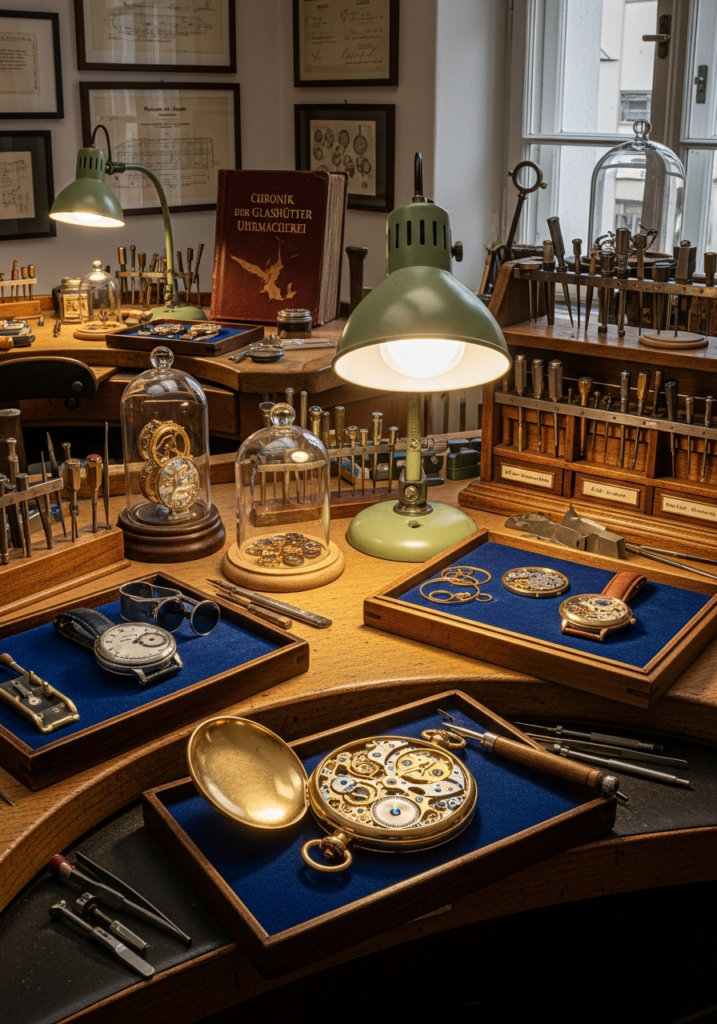
The mechanical excellence of A. Lange & Söhne is evident in every detail. Hallmarks include movements made from untreated German silver, screwed gold chatons, and the signature hand-engraved balance cock. These features are a tribute to the company’s 19th-century origins and a testament to its commitment to perfection.
Within just a few decades, the brand has created masterpieces like the Lange 1 and the Datograph, which are celebrated by collectors for their technical brilliance and flawless execution. A. Lange & Söhne represents the pinnacle of luxury watchmaking, not just in Germany, but globally.
NOMOS Glashütte: Modern Minimalism and Design
Founded just months after the fall of the Berlin Wall, NOMOS Glashütte introduced a fresh, modern aesthetic to the town’s traditional watchmaking landscape. The brand is celebrated for its sleek, Bauhaus-inspired designs that prioritize clarity, function, and understated elegance. This focus on modern minimalism sets it apart from the more classical styles of other local watchmakers.
Despite its contemporary design language, NOMOS Glashütte remains deeply committed to the region’s horological principles. It is Germany’s largest producer of high-end mechanical watches and is known for developing its own in-house movements. This combination of innovative design and traditional craftsmanship has earned the brand a loyal following.
Iconic watch models like the Tangente showcase the brand’s signature style with clean lines, simple typography, and a harmonious balance. While different in appearance, NOMOS watches still incorporate Glashütte features, blending modern design with time-honored techniques.
Trademark Features of Made in Glashütte Watches
Watches bearing the “Made in Glashütte” label are distinguished by a set of trademark features that reflect the region’s unique approach to German watchmaking. These characteristics are not merely decorative; they are born from a philosophy of precision engineering and functional robustness. From the movement architecture to the final assembly, every element is designed with purpose and longevity in mind.
These signature details are a visual and technical testament to the town’s 180-year-old heritage. Whether you are looking at the finishing standards or the aesthetics of the dial and case, a Glashütte watch has an unmistakable identity. Let’s examine these defining features more closely.
Precision Engineering and Finishing Standards
Precision engineering is at the core of every Glashütte timepiece. This is reflected in the high finishing standards applied to every component, whether the watch is cased in stainless steel or precious metals. The focus is always on creating a movement that is as durable and accurate as it is beautiful. This is a key part of the region’s horological identity.
A distinctive finishing technique is Glashütte ribbing, a decorative motif similar to Geneva waves but applied at a different angle. This adds visual depth to the movement and is a clear indicator of the watch’s origin. Another specialized technique is tin polishing, which creates a flawless, mirror-like surface on small steel parts.
These meticulous standards are non-negotiable and are applied with a deep respect for tradition. Key finishing and engineering hallmarks include:
- Glashütte Ribbing: A striped decoration on plates and bridges.
- Screwed Gold Chatons: These hold the movement’s jewels and are a nod to historic pocket watch construction.
- Perlage: A circular graining pattern applied to the main plate.
Unique Dial, Case, and Movement Aesthetics
The aesthetic of a Glashütte watch is one of restrained elegance and functional clarity. Dials are often designed for maximum legibility, with a balanced and harmonious layout. Asymmetrical designs, like those in the Pano collection from Glashütte Original, are executed with such precision that they still feel visually balanced. Cases tend to be classic in shape, allowing the dial and movement to take center stage.
The movement itself is a key part of the aesthetic. The three-quarter plate, often made of untreated German silver, provides a broad canvas for decorative finishes. This material develops a unique patina over time, adding to the watch’s character. The hand-engraved balance cock, which holds the balance wheel, is another signature feature, turning a functional component into a small work of art.
These elements combine to create a look that is unmistakably German. It’s an aesthetic that values structure, purpose, and subtle beauty over overt ornamentation, resulting in timepieces with a timeless and sophisticated appeal.
Modern Trends and Collectors’ Appeal in Glashütte Watchmaking
While deeply rooted in tradition, Glashütte watchmaking is not stuck in the past. Today’s watch brands are embracing modern trends, from sustainability initiatives to the use of contemporary materials and offering greater customization. This forward-thinking approach ensures that Glashütte remains relevant and appealing to a new generation of collectors who value both heritage and innovation.
For collectors, Glashütte watches offer a compelling alternative to their Swiss counterparts. The combination of in-house movements, exceptional craftsmanship, and often lower production volumes makes them highly desirable. We’ll explore how these modern trends are shaping the industry and contributing to its enduring appeal.
Sustainability, Contemporary Materials, and Customization
Modern Glashütte watchmakers are increasingly focused on sustainability, both in their production processes and material sourcing. This commitment resonates with today’s conscious consumers, who seek luxury products that are made responsibly. The timeless nature and durability of mechanical watches already make them a sustainable choice, and brands are building on this by improving their operational footprint.
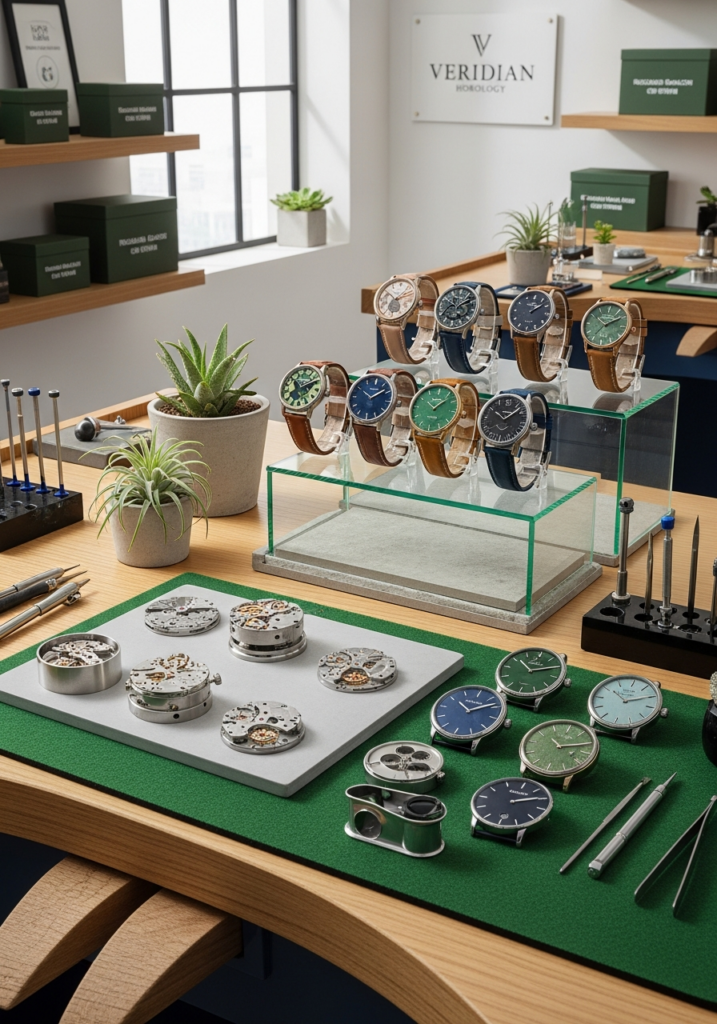
In addition to traditional materials, brands are exploring the use of advanced materials to enhance performance and aesthetics. While stainless steel and precious metals remain staples, some watchmakers are incorporating contemporary materials like ceramic for bezels or silicon for critical movement components, improving durability and magnetic resistance.
Customization is another growing trend, allowing collectors to personalize their timepieces. This can range from bespoke engravings to unique dial configurations, creating a one-of-a-kind watch that reflects the owner’s personal style. These trends include:
- The use of antimagnetic silicon for balance springs.
- Ceramic inlays for the bezels of dive watches for enhanced scratch resistance.
- Offering personalized engravings and custom features for discerning clients.
Conclusion
The legacy of Glashütte luxury watchmaking is a testament to skill, precision, and a deep-rooted passion for horology that spans over 180 years. From its historical origins to the innovative craftsmanship seen in iconic brands like A. Lange & Söhne and NOMOS Glashütte, this region continues to set standards in luxury watchmaking. The distinctive German approach offers a perfect blend of tradition and modernity, ensuring that each timepiece is not just a watch but a work of art. As you explore this fascinating world, consider what draws you to these exquisite creations and how they embody a unique blend of heritage and future-forward design. Dive deeper into your interest by engaging with Glashütte watches, whether through collecting or simply appreciating their unparalleled craftsmanship.
Frequently Asked Questions
What makes Glashütte luxury watches valuable for collectors?
Glashütte watches are valuable to collectors for their blend of rich heritage, mechanical excellence, and distinctive German watchmaking aesthetics. The combination of in-house movements, high-quality hand-finishing, and often limited production numbers makes them a unique and sought-after alternative in the world of luxury watchmaking.
How does NOMOS Glashütte differ from A. Lange & Söhne?
NOMOS Glashütte is known for its modern minimalism and Bauhaus-inspired designs, offering accessible luxury with in-house mechanical movements. In contrast, A. Lange & Söhne represents the pinnacle of German watchmaking, creating ultra-high-end timepieces in precious metals with exceptionally complex and lavishly hand-finished movements.
What should I look for when buying a luxury watch from Glashütte?
When buying a Glashütte watch, look for the hallmarks of its craftsmanship, such as the three-quarter plate and swan-neck regulator. Consider the brand’s reputation for precision engineering and in-house final assembly. Researching iconic models can also help you find a timepiece that aligns with your personal taste and appreciation for horology.
https://www.instagram.com/sjxwatches
https://www.youtube.com/@VintageDuMarko
https://en.wikipedia.org/wiki/Ratchet_(device)
https://www.exquisitetimepieces.com
https://www.threads.com/@dumarko_official
https://www.geraldcharles.com/collection/#gc30-chronograph
Leave a Reply