
What is the gray market watches? A Beginner’s Overview
Key Highlights
Here are the key takeaways from our discussion on gray market watches:
- Gray market watches are authentic timepieces sold outside of a brand’s authorized dealer network.
- The gray market operates by sourcing watches from authorized dealers with excess stock, private sellers, and international distributors.
- Buyers often choose the gray market for lower prices and to bypass long waitlists for models in high demand.
- You can find rare and discontinued luxury watch models that are no longer available through official channels.
- While they may lack a manufacturer warranty, reputable dealers often provide their own guarantees.
Introduction
The luxury watch industry is known for its exclusivity and fine craftsmanship. Behind the polished veneers of official boutiques, however, lies a parallel world: the gray market. This alternative marketplace is a fascinating and essential aspect of the watch industry, offering both opportunities and challenges for collectors and enthusiasts. Have you ever wondered what the gray market is and why it continues to be so popular? Let’s explore this dynamic segment of the watch trade together.
Understanding Gray Market Watches
So, what exactly are gray market watches? These are genuine, brand-new timepieces sold through channels that are not authorized by the manufacturer. They are 100% authentic, made by the respective luxury watch brands, but they reach you through a different route than the traditional retail network.
This alternative market exists between the authorized dealer and private sellers. It provides a unique opportunity for buyers to purchase a luxury watch that might come from an authorized dealer’s excess stock, a discontinued line, or international distributors.
Definition and Distinction from Authorized Dealers
The gray market is defined by the sale of authentic goods through unofficial distribution channels. Unlike an authorized dealer (AD), who is officially approved by the watch brand to sell its products, a gray market seller operates independently. These sellers acquire genuine watches and sell them outside the brand’s controlled network.
The primary distinction is the relationship with the brand. An authorized dealer has a direct contract, ensuring they adhere to brand pricing, presentation, and service standards. They are part of the official retail channels.
In contrast, gray market dealers are not bound by these agreements. This allows them to offer different pricing and access to a wider variety of models. This freedom from brand control is what defines the gray watch market and sets it apart from the traditional retail experience you’d find in a brand’s boutique.
Difference Between Gray Market and Black Market
It’s crucial to distinguish the gray market from the black market, as they are entirely different. The key difference lies in the legality and authenticity of the products being sold. The black market deals with illegal goods, such as stolen or counterfeit items.
Gray market watches, on the other hand, are completely legitimate. The term “gray” refers to the unofficial nature of the distribution channels, not the legality of the watches themselves. These are authentic products that have simply been diverted from the standard retail path.
To put it simply:
- Gray Market: Sells genuine, legal products through unauthorized channels.
- Black Market: Sells illegal goods, including fakes and stolen items.
- The luxury watch industry has a prominent gray market, but buying from the black market is illegal and risky.
Common Misconceptions About Gray Market Watches
Several misconceptions surround the gray market, which can cause confusion for potential buyers. One of the most common is that these watches are fake or of lower quality. This is simply not true. Gray market watches are authentic timepieces from the original manufacturers.
Another misunderstanding relates to their condition. Many believe these watches are all used or damaged. While pre-owned watches are part of the market, many gray market dealers sell brand-new, unworn timepieces. The key is to verify the legitimacy of the watch and the seller.
Here are a few myths to debunk:
- Myth: Gray market watches are counterfeit. Fact: They are 100% authentic.
- Myth: They are always second-hand. Fact: Many are new, unworn, and from excess stock.
- Myth: Buying them is illegal. Fact: The practice is legal, though it operates outside official brand channels. Reputable sellers offer authenticity guarantees, ensuring you are purchasing a genuine product.
How the Gray Market for Watches Operates
How do these luxury watches end up on the gray market in the first place? The process involves a few key sources that supply this alternative marketplace. Dealers acquire inventory from authorized retailers with surplus stock, from private individuals selling their collections, and from international distributors.
This network allows gray market sellers to build a diverse inventory that often includes models unavailable elsewhere. The system thrives on market dynamics like pricing differences and regional demand. We will now look into these sources and mechanisms more closely.
Role of Parallel Imports and International Pricing
Parallel imports are a cornerstone of the gray market. This refers to the practice of buying watches in one country where they are priced lower and selling them in another country where the retail price is higher. These price differences create a profitable opportunity for gray market dealers.
International pricing for the same luxury watch can vary significantly. These variations are often due to several factors that dealers can leverage.
- Currency Fluctuations: Changes in exchange rates can make watches cheaper in certain regions.
- Local Taxes: Differences in import duties and sales taxes affect the final retail price.
- Regional Demand: Luxury brands may price items differently based on local market conditions.
By taking advantage of these price discrepancies, dealers can offer competitive pricing in the alternative marketplace, attracting buyers who are looking for a better deal than what is offered by local authorized retailers.
Sources of Gray Market Watches
A gray market dealer sources their inventory from a wide range of sources, which is why they can offer such a diverse collection of timepieces. Understanding these sources can help you feel more confident about where the watches come from.
One major source is authorized dealers who need to offload excess inventory. Another is private sellers—collectors or individuals who decide to sell watches from their personal collections. This often includes pre-owned pieces in excellent condition.
Here are the primary sources:
- Authorized Dealers: Selling surplus or discontinued models.
- International Distributors: Taking advantage of regional price differences.
- Private Sellers: Individuals selling pre-owned watches.
- Collectors: Trading or selling pieces to acquire new ones.
How Authorized Dealers Contribute to the Market
You might be surprised to learn that authorized dealers (ADs) can be a significant source for the gray market. ADs often have sales targets they need to meet, and sometimes they order more stock than they can sell through their official retail channels.
When an authorized dealer has excess stock, such as discontinued models or less popular pieces, they may sell this inventory to a gray market seller. This helps the AD clear out old models to make room for new ones and recover some of their investment. While brands may discourage this practice, it’s a reality in the watch industry.
This process allows watches that might otherwise sit unsold to enter the market, often at a lower price point. It’s a behind-the-scenes aspect of the watch industry that helps keep inventory moving and contributes to the variety available on the gray market.
Why Buyers Choose the Gray Market
With all this information, you may be wondering why someone would choose to buy from the gray market instead of an authorized dealer. The reasons are quite compelling and usually boil down to three main benefits: price, availability, and access to specific models. For many, the chance to get a luxury watch for a better price is a major draw.
The gray market can be a treasure trove for collectors looking for rare pieces or for anyone who doesn’t want to wait for a watch in high demand. Let’s explore these advantages in more detail.
Access to Rare or Discontinued Models
For watch collectors and enthusiasts, the gray market is a fantastic place to find rare pieces that are no longer in production. When luxury brands discontinue a model, it becomes unavailable through authorized channels. However, these watches often surface on the gray watch market.
This provides a second chance to acquire a specific timepiece you may have missed. Limited editions and hard-to-find models are frequently listed by gray market sellers, making it an excellent way to track down something truly unique for your collection.
Consider these benefits:
- Find discontinued models that are no longer sold by ADs.
- Access limited edition timepieces that sold out quickly.
- Discover vintage and rare pieces from top luxury brands.
- Build a more unique collection with watches not commonly available.
Avoiding Long Waitlists
Have you ever tried to buy one of the most popular models from a top luxury brand? If so, you’re likely familiar with the infamous long waitlists. For watches in high demand from brands like Rolex, Patek Philippe, and Audemars Piguet, waiting times can stretch for months or even years.
The gray market offers an immediate solution. While you might pay a premium for highly sought-after pieces, you can get the watch right away without the wait. This is a major advantage for buyers who value instant gratification and don’t want to navigate the often complex relationships required to move up a waitlist at an AD.
Here’s why bypassing waitlists is a huge plus:
- Immediate availability of popular models.
- No need to wait months or years for your dream watch.
- Access to pieces that are nearly impossible to get at retail.
- A straightforward purchasing process without the uncertainty of a waitlist.
Price Advantages Compared to Authorized Dealers
One of the most significant draws of the gray market is the potential for significantly lower prices compared to an authorized dealer. Because gray market sellers don’t have the same overhead costs or pricing restrictions from brands, they can often offer a better price on many luxury watches. This can make owning a high-end timepiece much more accessible.
While some highly sought-after models might sell for above retail due to high demand, many others are available at a discount. This price difference can mean saving hundreds or even thousands of dollars on your purchase.
Here’s a simple comparison:
| Feature | Authorized Dealer | Gray Market Dealer |
|---|---|---|
| Pricing | Set by the brand (MSRP) | Often below MSRP |
| Discounts | Rare, especially on popular models | Common on many models |
| Accessibility | Can be exclusive | More accessible |
This pricing flexibility is a key reason why many savvy buyers in the luxury watch industry turn to the gray market.
Risks and Considerations When Buying Gray Market Watches
While the gray market offers great benefits, it’s important to be aware of the potential risks. The biggest concerns for buyers usually revolve around warranties and authenticity. Since these watches are sold outside of official channels, they may not come with official manufacturer warranties, which is a key consideration.
Navigating these risks requires careful research and choosing a reputable seller who provides their own authenticity guarantees. Let’s look at what you need to know about warranties, authenticity, and the legal aspects to ensure a safe purchase.
Warranty Limitations and Manufacturer Policies
A major point to consider is that gray market watches typically do not come with official manufacturer warranties. Because the watch is sold by an unauthorized seller, the original warranty from the luxury watch brand is often voided. This is a key part of manufacturer policies designed to protect their authorized retail network.
However, this doesn’t mean you’re left without any protection. Many reputable gray market dealers offer their own warranties. These in-house guarantees can cover repairs and servicing for a specified period, offering you peace of mind with your purchase.
Key points about warranties include:
- Official manufacturer warranties are usually not included.
- Reputable dealers often provide their own warranties.
- Always check the terms and duration of the seller’s warranty.
- Skilled independent watchmakers can service your watch if needed. It’s essential to clarify the warranty situation before buying.
Authenticity Concerns and Verification Methods
Authenticity is a valid concern when buying any luxury item outside of official stores. How can you be sure the watch is real? While the gray market, by definition, deals in genuine goods, dishonest sellers can try to pass off counterfeits. Therefore, it’s crucial to verify the legitimacy of the watch.
Reputable sellers in the luxury watch industry will always offer authenticity guarantees. They have experts who inspect every timepiece to ensure it is 100% genuine. You can also take steps to verify the watch yourself.
Here are some verification methods:
- Check Serial Numbers: Ensure the serial numbers on the watch match any accompanying paperwork.
- Inspect the Details: Look for high-quality finishing, correct logos, and proper weight.
- Seller Guarantees: Only buy from dealers who provide clear authenticity guarantees.
- Get a Second Opinion: Have the watch inspected by a trusted third-party expert if you have doubts.
Legal Aspects and Regulations in the United States
Are there any legal issues with buying a gray market watch? In the United States, the sale of gray market goods is generally legal. The “first-sale doctrine” in U.S. copyright and trademark law allows the owner of a legally purchased item to resell it without permission from the manufacturer.
This means that as a buyer, you are not breaking any laws by purchasing a watch from a gray market dealer. The main regulations and legal issues concern the sellers, particularly regarding how they import the watches and represent them to consumers.
Here are some legal points to remember:
- Buying gray market watches is legal for consumers in the United States.
- The first-sale doctrine protects the resale of genuine goods.
- Legal issues are more relevant to importers and sellers than to buyers.
- Always ensure your gray market dealer operates transparently and within the law.
Beginner’s Guide: How to Buy a Gray Market Watch
Ready to explore the gray market? With the right approach, buying a luxury watch from a gray market dealer can be a smooth and rewarding experience. The key is to do your homework and partner with a trusted dealer who can guide you through the process.
This guide will walk you through the essential steps, from setting a budget and researching your desired watch to verifying a seller’s reputation and understanding their policies. Following these tips will help you make a confident and safe purchase.
What You Need to Get Started (Budget, Trusted Sources, Research)
Before you start browsing, it’s wise to prepare. The first step is to establish a clear budget. Knowing how much you’re willing to spend will help narrow your options and keep your search focused. Luxury watches span a wide price range, so having a budget is essential.
Next, dedicate time to research. Learn about the specific brands and models that interest you. Understand their market value, common features, and what to look for in terms of condition. The more you know, the better equipped you’ll be to spot a good deal.
Here’s a checklist to get you started:
- Set a Budget: Decide on a comfortable price range.
- Do Your Research: Learn about the watches you like.
- Identify Trusted Sources: Look for dealers with strong reputations.
- Consider Sourcing Services: If you can’t find a watch, some dealers offer comprehensive sourcing services to find it for you.
Step-by-step Guide to Purchasing Safely
Navigating the gray market for the first time can feel overwhelming, but a systematic approach will ensure a safe purchase. By following a few key tips, you can confidently buy the luxury watch you’ve been dreaming of without any stress. This step-by-step guide is designed to help you make informed decisions at every stage of the process.
The journey begins with choosing your watch and finding a reliable gray market dealer. It continues with verifying authenticity, understanding all policies, and completing the transaction securely. Each step is crucial for protecting your investment and ensuring you are happy with your new timepiece.
Let’s break down the process. From initial research to the final payment, following these guidelines will help you partner with the right dealer and find the perfect watch from one of the top luxury watch brands.
Step 1: Research and Choose Your Desired Watch
The first and most exciting step is deciding which watch you want to buy. Think about what you’re looking for in a timepiece. Are you interested in a specific brand, style, or function? Researching different models will help you identify your ideal watch.
Once you have a model in mind, look at the current inventory of various dealers. Pay close attention to the listings. Reputable sellers provide detailed descriptions and high-quality photos from multiple angles. This will give you a clear idea of the watch’s condition.
Here’s what to look for when researching:
- Detailed Descriptions: Check for information on age, condition, and included accessories.
- High-Quality Images: Scrutinize photos for any signs of wear or damage.
- Included Items: See if the watch comes with its original box and papers.
- Warranty Information: Note if official manufacturer warranties or dealer warranties are mentioned.
Step 2: Find Reputable Gray Market Dealers
Once you know what watch you want, the next step is to find reputable grey market sellers. Not all dealers are created equal, so it’s vital to find one you can trust. Start by searching well-known online marketplaces and forums dedicated to luxury watches, as these communities often recommend trusted sellers.
A dealer’s online presence can tell you a lot. Check their website for professionalism and transparency. Do they have a physical address and contact information? A strong presence on social media with active engagement can also be a positive sign, as it shows they are open to public scrutiny.
To find a good dealer, you should:
- Ask for recommendations on watch forums and communities.
- Look for established sellers with a long history in the business.
- Check their website and social media presence for legitimacy.
- Favor dealers who are transparent about their business practices.
Step 3: Check Dealer Reviews and Authenticity Guarantees
Before committing to a purchase, thoroughly investigate the dealer’s reputation. Online reviews are an invaluable resource. Look for Google reviews, testimonials on their website, and feedback on independent platforms like watch forums or Trustpilot. Consistent positive feedback is a strong indicator of a trusted dealer.
Equally important are the authenticity guarantees they offer. A reputable seller will stand behind the legitimacy of their products and should have a clear, written policy stating that every watch is 100% authentic. This is a non-negotiable aspect of buying from the gray market.
When vetting a dealer, make sure to:
- Read a wide range of reviews from multiple sources.
- Confirm they offer a clear authenticity guarantee.
- Check if they have experts on staff to verify watches.
- Be wary of dealers with no reviews or vague policies. This is a hallmark of the best in the luxury watch industry.
Step 4: Understand Return Policies and Warranty Coverage
A trustworthy gray market dealer should have transparent and fair customer policies. Two of the most important to understand are their return policies and warranty coverage. A clear return policy gives you an out if the watch isn’t what you expected, providing essential peace of mind.
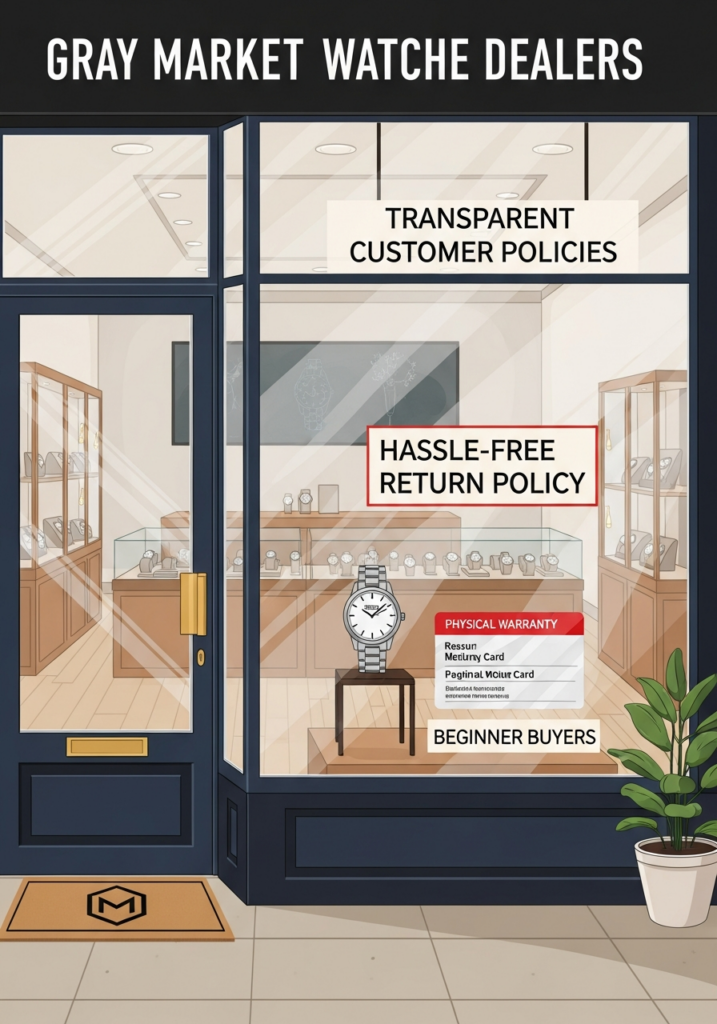
Since manufacturer warranties are often void, the dealer’s own warranty becomes your primary protection. Find out what their warranty covers, how long it lasts, and what the process is for making a claim. This information should be easy to find on their website or by contacting them directly.
Before you buy, confirm the following:
- The duration and conditions of the return policy.
- The length of the dealer’s warranty coverage.
- What is covered under the warranty (e.g., movement, defects).
- The procedure for returns or warranty service.
Step 5: Verify Packaging, Papers, and Secure Payment
The final step is to confirm the details of the watch and complete your payment securely. Ask the dealer about the packaging and papers. A watch that comes with its original box, warranty card, and manuals (often called a “full set”) is generally more desirable. These items help confirm the watch’s provenance.
When it’s time to pay, ensure the dealer offers a secure payment method. Options like credit cards or PayPal often provide an extra layer of buyer protection. Avoid sellers who insist on wire transfers only, especially if you have not dealt with them before, as these payments are difficult to reverse.
Your final checklist should include:
- Confirming the inclusion of the original box and papers.
- Using a secure payment method like a credit card.
- Getting a receipt or invoice for your purchase.
- Verifying shipping and insurance details for the delivery. This ensures your transaction is as safe as buying through official channels.
Popular Luxury Watch Brands Found on the Gray Market
The gray watch market is filled with an incredible variety of luxury watch brands. You can find everything from iconic tool watches to elegant dress pieces. Some brands, however, are more commonly found than others due to their high demand, production numbers, and global popularity.
Brands like Rolex, Omega, and TAG Heuer are staples of the gray market. You will also frequently see highly exclusive luxury timepieces from makers like Patek Philippe and Audemars Piguet. Let’s look at some examples and why they are so prevalent.
Examples: Rolex, Omega, TAG Heuer, and Others
You will find many of the world’s most famous watch brands on the gray market. Rolex is perhaps the most prominent, with popular models like the Submariner and Rolex Daytona being widely available, often at a premium due to immense demand. Omega is another brand you’ll see frequently, with its Speedmaster and Seamaster collections being perennial favorites.
TAG Heuer also has a strong presence, offering a great entry point into the world of luxury Swiss watches with models like the Carrera and Formula 1. Beyond these, you can find watches from a wide range of other prestigious brands. For example, at BQ Watches, our inventory often includes pieces from Patek Philippe, Audemars Piguet, Cartier, and Breitling.
Here are a few popular models you might find:
| Brand | Popular Model | Why It’s Popular |
|---|---|---|
| Rolex | Daytona | Iconic status and high demand |
| Omega | Speedmaster | History with NASA and classic design |
| TAG Heuer | Carrera | Strong motorsport heritage |
| Patek Philippe | Aquanaut | Exclusivity and brand prestige |
Reasons These Brands Are Frequently Sold
Why are certain brands so common in this segment of the watch trade? The primary reason is high demand. When a brand produces watches that everyone wants, but production capacity is limited, scarcity drives buyers to the gray market where the watches are available immediately.
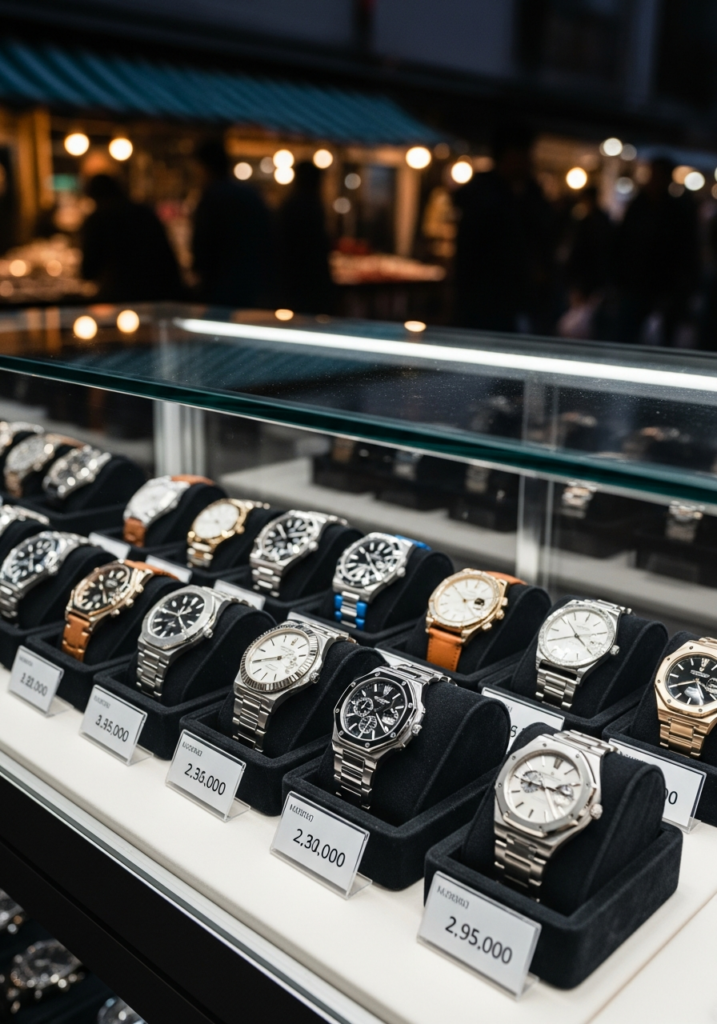
This creates a balancing act for the brands themselves. While they want to maintain exclusivity, the gray market provides an outlet for their products to reach a wider audience. It also helps move excess inventory from authorized dealers, ensuring that even less popular models find a home.
Several factors contribute to a brand’s prevalence on the gray market:
- High global demand that outstrips supply from authorized dealers.
- Limited production capacity for certain highly desirable models.
- Strong brand recognition and status, which fuels desire.
- Price discrepancies across different international markets.
Conclusion
In summary, understanding the gray market for watches can empower you as a buyer, allowing you to navigate this unique segment with confidence. By knowing the distinctions between authorized and gray market dealers, the benefits of purchasing from this market, and the crucial considerations to keep in mind, you can make informed decisions. Whether it’s accessing rare models or enjoying price advantages, the gray market offers exciting opportunities for watch enthusiasts. If you’re ready to dive into the world of gray market watches, consider seeking expert advice or resources to guide your purchasing journey. For more personalized guidance, feel free to reach out for a free consultation!
Frequently Asked Questions
Are gray market watches authentic?
Yes, gray market watches are authentic. They are genuine timepieces made by luxury watch brands but sold outside of official channels. To ensure the legitimacy of the watch, always buy from reputable dealers who provide clear authenticity guarantees, as this is a key practice in the gray market portion of the luxury watch industry.
Is it safe to buy watches from gray market dealers?
It is safe to buy from a gray market dealer, provided you choose a trusted dealer with a strong reputation. Look for sellers who offer authenticity guarantees, clear return policies, and their own warranties. Doing your research on the dealer will give you peace of mind and ensure a secure transaction.
Do gray market watches come with manufacturer warranties?
Typically, gray market watches do not come with official manufacturer warranties, as they are sold by unauthorized sellers. However, many reputable gray market dealers provide their own warranties to cover the watch for a certain period. Always confirm the warranty details with the dealer before making a purchase.
Are there any legal issues buying gray market watches in the United States?
No, there are no legal issues for consumers buying gray market watches in the United States. The practice is legal under the first-sale doctrine. The regulations primarily concern the importers and sellers, not the end buyers. You can legally purchase from the gray market with confidence.
https://www.youtube.com/@WatchesOff5th
https://www.rolex.com/watches/submariner/m126613lb-0002
https://pentiumtechnologies.com/brawl
https://www.youtube.com/@WATCHMYDIAMONDS
https://www.youtube.com/c/FratelloMagazine
Leave a Reply