
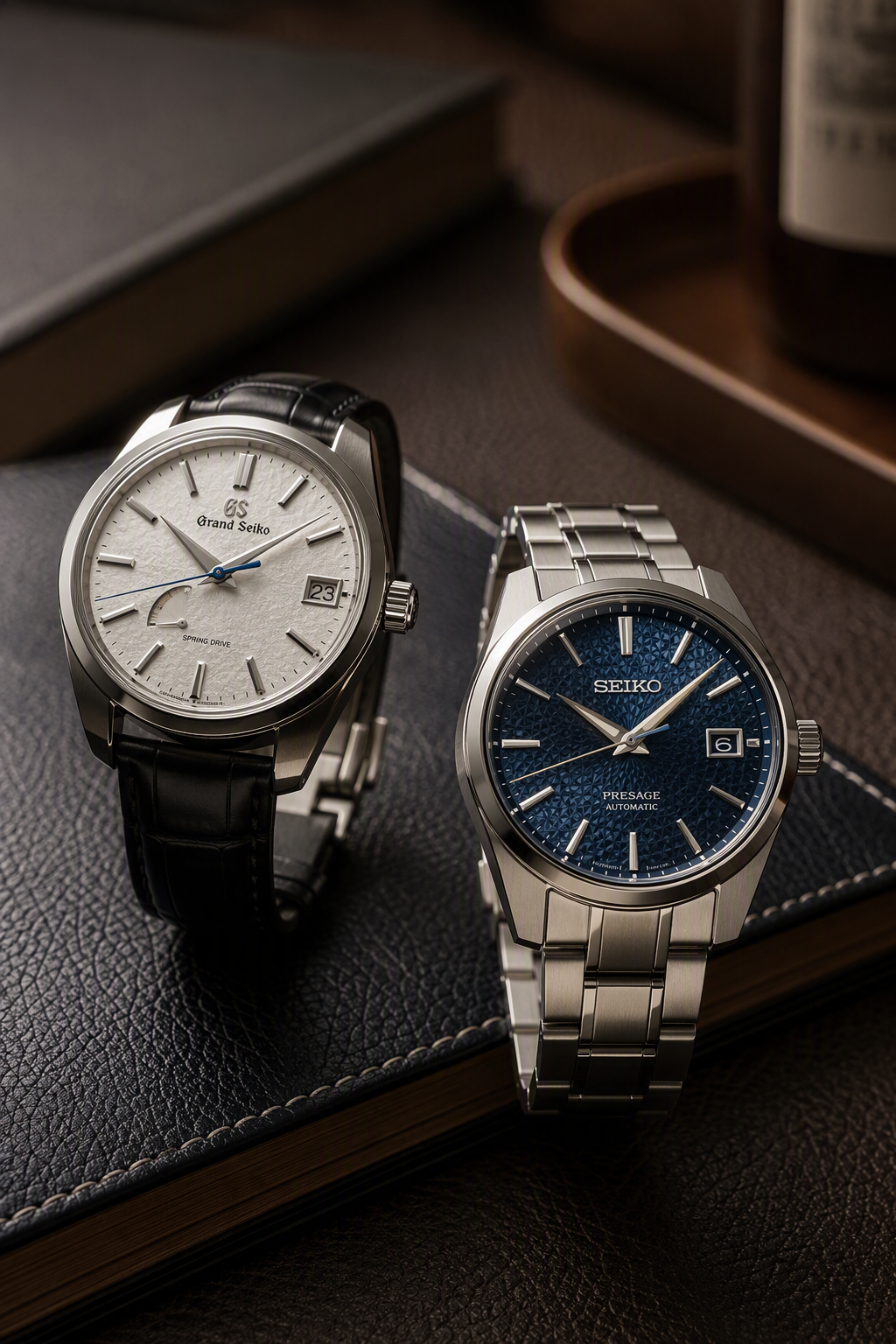
Exploring the Japanese Market for Watches: A Guide for Buyers
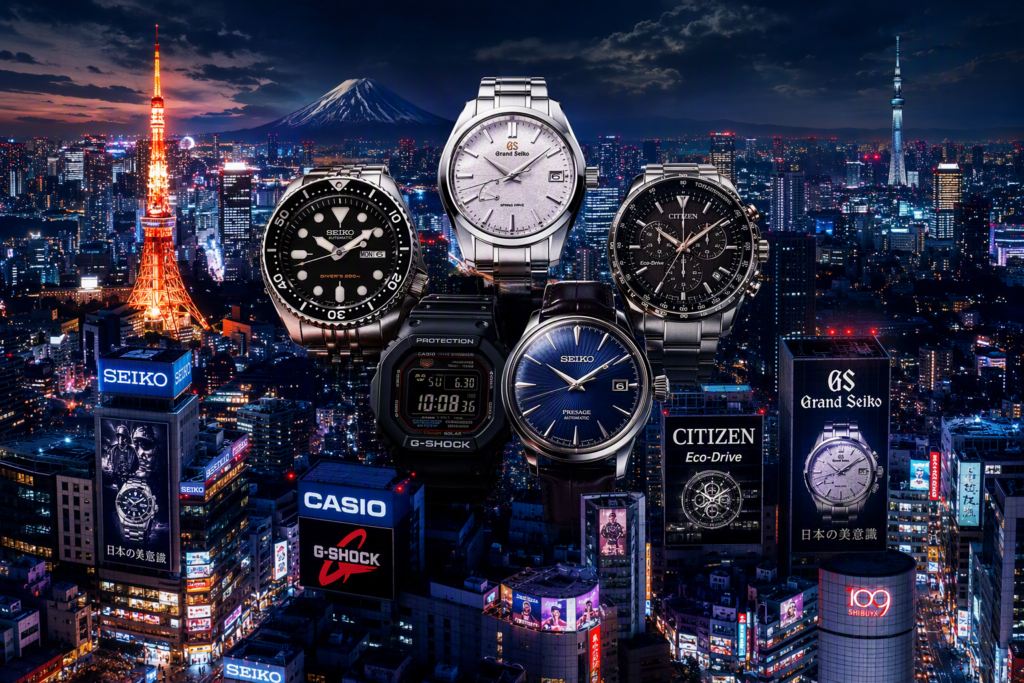
Key Highlights
- Japanese watch brands cover every budget, from simple quartz watches to hand-finished luxury pieces.
- Seiko, Citizen, and Casio remain the most popular names you will see across the market.
- Buyers can choose between digital watches, mechanical movements, and refined dress styles with strong water resistance.
- Japan is a strong place to look for exclusive editions and Japan-exclusive models.
- Careful shopping through trusted stores helps you avoid fakes and find the best Japanese watch for your needs.
Introduction
Japanese watchmaking has shaped the global industry by pairing precision with practical value. If you are buying in Japan, you will quickly notice how broad the selection is. One store may offer a casual digital watch type, a sturdy diver, and a polished dress model side by side. The price range is just as wide, starting with affordable everyday options and moving into serious luxury. That variety makes Japan exciting, but it also means you need a clear plan before you buy.
Understanding the Japanese Watch Market Landscape
The Japanese watch industry stands out for precision, variety, and high standards across many price levels. You can shop for affordable daily wear, advanced quartz pieces, or luxury models with refined finishing and strong power reserve performance.
Before buying, focus on the seller, the intended market, and the watch itself. A domestic market model may differ from an export version, and a mechanical gear train watch should be checked for condition, papers, and service history. These points shape the sections below.
Key Trends Shaping the Japanese Watch Industry
One clear trend is range. Japan offers strong entry-level choices and serious collector pieces in the same market. You will find mechanical movements powered by trusted calibers, but quartz watches still play a major role because buyers value accuracy, battery convenience, and everyday practicality.
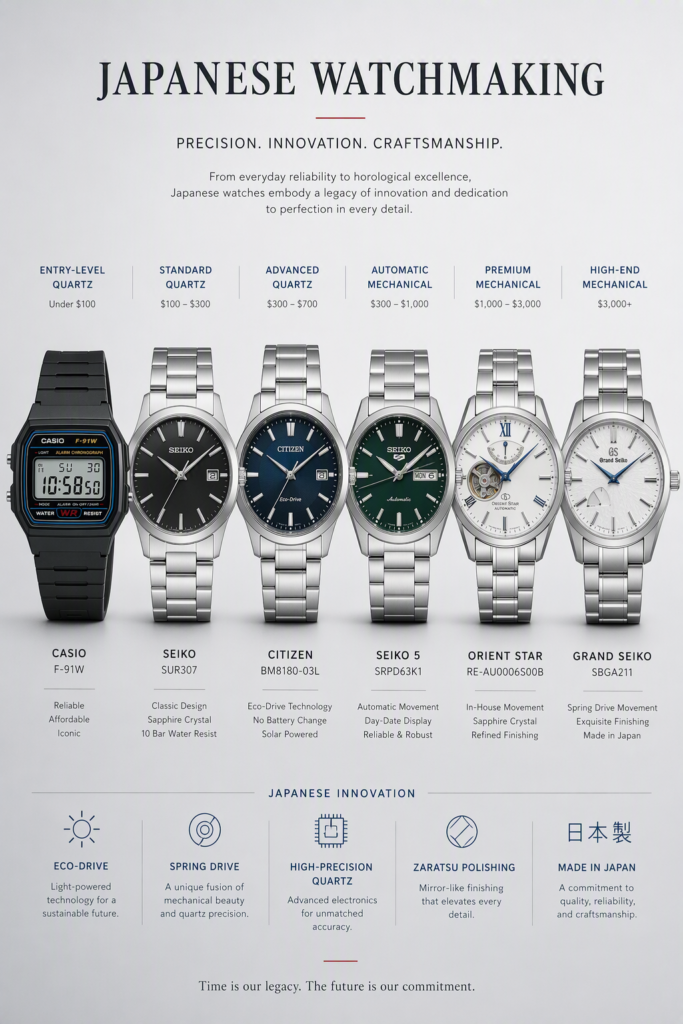
Another shift is feature-driven design. Brands keep pushing useful technology while holding high standards in finishing and reliability. In Japan, function often matters as much as prestige.
- Casio built major demand around shock resistance, long battery life, and digital usability.
- Citizen expanded interest in light-powered technology through Eco-Drive models.
- Tool-focused watches can include advanced elements such as an integrated depth gauge or radio timekeeping.
In many cases, prices in Japan can be more attractive than overseas, especially when stores offer tax-free sales or discounts. Still, final cost depends on shipping, import fees, and exchange rates.
What Makes Japanese Watches Unique for Buyers?
Japanese watches appeal to buyers because they blend practical engineering with thoughtful styling. You can buy an affordable stainless steel model for daily use or move into luxury pieces with careful hand finishing. Many designs stay wearable for years because the focus is on balance, clarity, and timeless design.
At the higher end, innovation becomes a major selling point. Seiko introduced spring drive, a system that combines mechanical feel with electronic regulation. Some models also include a power reserve indicator, which adds everyday usefulness.
- Distinctive case designs help brands like Minase stand apart.
- Grand Seiko built a strong reputation for dial work and precise finishing.
- Credor shows how far Japanese craftsmanship can go in small production.
- Even simpler models often deliver reliability beyond their price.
Yes, risks of fake or replica watches exist, especially in less controlled channels. That is why trusted retailers, full documentation, and careful inspection matter.
Popular Japanese Watch Brands to Know
If you are learning the market, start with the names buyers see most often. Seiko watches, Citizen watch models, Casio, and grand seiko watches are central to the conversation because they cover everyday wear, sports styles, and luxury collecting.
At the same time, Japanese watch brands go far beyond the biggest companies. You will also find boutique labels and the work of an independent watchmaker, giving buyers more personality and scarcity. Here are the key groups worth knowing first.
Leading Established Brands: Seiko, Citizen, Casio
Three names lead the field for most buyers: Seiko, Citizen, and Casio. Seiko watches carry the deepest historical weight, with everything from affordable Seiko 5 models to luxury Grand Seiko. Citizen watch lines are known for Eco-Drive practicality, while Casio dominates tough digital and sporty segments.
These brands matter because they reach across budgets. You can start with quartz watches for daily use, step into mechanical movements, or move toward premium finishing without leaving Japanese makers behind. The compiled information shows how broad their appeal has become.
| Brand | Known for | Typical appeal |
|---|---|---|
| Seiko | Historic innovation, broad lineup, Spring Drive link through Grand Seiko | Buyers wanting range from entry level to luxury |
| Citizen | Eco-Drive, Miyota movement influence, solid value | Buyers wanting easy ownership and dependable use |
| Casio | G-Shock durability, digital leadership, long battery life | Buyers wanting utility, sports use, and modern features |
The compiled material does not support a role for swiss investors in shaping these brands, so buyers should focus instead on the brands’ own long-standing identities.
Luxury and Independent Watchmakers in Japan
Luxury Japanese watchmaking has real depth. Grand Seiko is the best-known premium name, offering strong finishing, refined dials, and advanced movement work. Credor goes even further in small-scale artistry, with the credor eichi ii often cited as a showcase of handcraft and exclusivity.
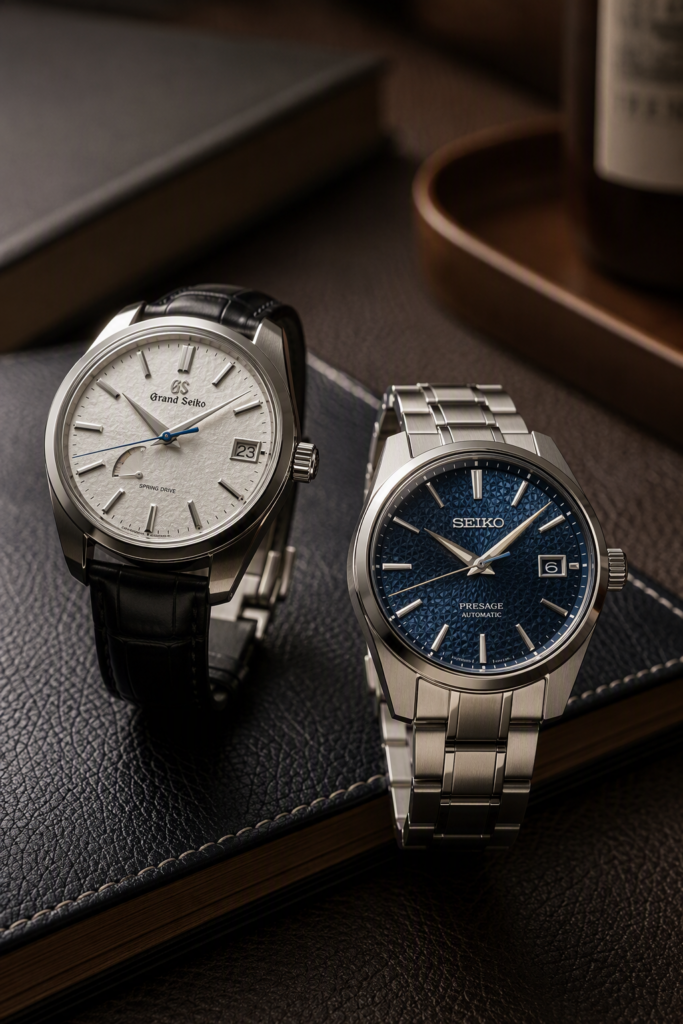
Independent creators add another layer for serious buyers. An independent watchmaker can offer far lower production numbers and a more personal design language than a large brand. That is a major reason collectors shop in Japan for rare pieces.
- Hajime Asaoka produces handmade watches and also oversees Kurono Tokyo.
- Naoya Hida creates very limited runs, with hand-engraved details by craftsman Keisuke Kano.
- Credor pieces, especially the Credor Eichi II, are produced in very small numbers.
Yes, Japan is one of the best places to seek limited and exclusive pieces, especially from luxury and independent makers.
Up-and-Coming Niche and Boutique Brands
Beyond the famous names, smaller labels give buyers fresh options. These Japanese watch brands often focus on design personality, customization, or low-volume production. That makes them appealing if you want something less common without always jumping straight to very high prices.
Some of these makers stand out because they mix strong styling with fair pricing. For many shoppers, that means best value watches rather than mass-market pieces. If you want something distinctive, a boutique brand can be a perfect choice.
- Knot is known for customization, letting buyers pair watch heads with different straps made in Japan.
- Kuoe Kyoto offers vintage-inspired models and the Royal Smith Automatic chronograph for a bolder look.
- Minase brings unusual case architecture, while the work linked to craftsman Keisuke Kano shows how hand detail still matters in the niche space.
For online buying, trusted specialist retailers with authenticity guarantees and clear product images are the safest route.
Types of Watches Available in Japan
Japan offers nearly every watch type a buyer could want. You can choose elegant dress watches, rugged divers, practical field models, and bold sports pieces. Mechanical movements remain popular with enthusiasts, while quartz watches and digital watches attract buyers who want accuracy and ease.
That variety also includes rare releases. Japan-exclusive and limited runs appear across several categories, not just luxury. So if you are hoping to find something uncommon, the type of watch you choose can shape how easy that search becomes.
Classic Mechanical and Automatic Timepieces
Mechanical watches still hold a strong place in Japan. Buyers who enjoy craftsmanship often look for automatic or hand-wound pieces because the movement itself feels alive. A well-made mechanical gear train offers character that many collectors find more engaging than battery-powered options.
The market spans affordable everyday models and highly refined luxury pieces. If you want a traditionally designed dress watch, Japan gives you plenty of choices. Some watches emphasize finishing, while others focus on durability and ease of service.
- Seiko 5 remains a common entry point for automatic ownership.
- Orient is well known for in-house automatic movements at accessible prices.
- Grand Seiko adds luxury finishing and advanced movement development.
- Many models highlight power reserve as a useful ownership detail.
In some cases, these watches can cost less in Japan than abroad. Discounts and tax-free shopping help, though import charges can reduce the final advantage for overseas buyers.
Innovative Quartz and Digital Watches
Japan changed watch history through quartz innovation, and that strength remains clear today. Quartz watches are popular because they are accurate, dependable, and often more affordable. Digital watches are just as important, especially for sports, travel, and casual daily wear.
Casio and Citizen lead much of this space. Casio built major demand with durable digital models and G-Shock toughness, while Citizen added light-powered convenience through Eco-Drive. These watches appeal to buyers who want practical features without mechanical upkeep.
- G-Shock models are known for long battery life and durable construction.
- Many digital watches include an alarm function, timers, and multiple display tools.
- Water-focused models can offer strong meters of water resistance for active use.
Among the most popular names in this category, Casio, Citizen, and Seiko remain the ones buyers see most often in Japan.
Limited Editions and Japan-Exclusive Models
If you want something harder to find, Japan is a very strong market. Buyers regularly search here for exclusive editions, domestic-only releases, and low-volume collector pieces. These can appear in both affordable and premium categories, which makes the hunt appealing across different budgets.
The appeal often comes from design, rarity, or production method. Some pieces become desirable because they are sold only in Japan, while others stand out through unique construction. That can make a model feel like the best Japanese watch for a collector who values scarcity.
- Minase’s Five Windows model is a clear example of unusual design and visibility.
- Kurono Tokyo limited runs often sell out quickly.
- Credor and Naoya Hida represent rare high-end opportunities at a very different price point.
Yes, shopping in Japan can absolutely help you find Japan-exclusive models that are difficult to source elsewhere.
Shopping for Watches in Tokyo and Major Cities
Tokyo is the best-known destination, but other major cities also offer strong watch shopping. You can compare department stores, flagship boutiques, specialist shops, and second hand dealers depending on your budget and goals.
Nakano is especially notable because it is home to respected watch sellers, including stores with both new and preowned inventory. If you want variety in one trip, focus on areas where authorized dealers and established retailers are grouped together. The next sections show where each shopping style works best.
Iconic Department Stores and Flagship Boutiques
Department stores and flagship boutiques are a smart starting point if you want a polished buying experience. These locations usually present watches clearly, offer brand-trained staff, and make it easier to compare styles in person. For first-time buyers, that confidence can be worth a lot.
Tokyo gives you the best access to this format, especially in major shopping districts. Flagship boutiques are useful when you want the latest collections, while department stores can give you broader brand variety under one roof. Both settings tend to deliver strong customer service.
- Choose department stores when you want to compare several brands in one visit.
- Visit flagship boutiques if you are chasing a specific model or exclusive editions.
- Ask staff about domestic-only references and warranty details before buying.
For buyers asking where to shop in Tokyo, these larger retail spaces are among the safest and easiest places to begin.
Specialty Watch Retailers and Authorized Dealers
Specialty retailers are often the best option when you want more focused help. These shops usually understand specific watch brands in greater detail and can explain differences between models, movements, and market versions. That is helpful if you are comparing domestic and overseas references.
Authorized dealers are especially important for buyers who want maximum peace of mind. They tend to follow high standards for authenticity, warranty handling, and presentation. In Tokyo, these stores can be easier to trust than unknown sellers, especially for luxury models.
- Use authorized dealers for new purchases where warranty support matters most.
- Ask specialty staff about model history, availability, and service background.
- Prioritize stores known for consistent customer service and clear sales terms.
For many buyers, the safest answer in Tokyo is simple: start with recognized specialty shops and authorized dealers before exploring anything less established.
Where to Find Preowned and Vintage Watches
Japan is also a strong place to shop for preowned watches and vintage watches. Buyers often like the condition standards and the organized presentation found in established stores. That can make second hand shopping feel less risky than in loosely regulated markets.
Nakano Sun Mall stands out because it is known for respected watch sellers and a broad mix of new and used pieces. You can see mainstream luxury, sports models, and older references in one area. For collectors chasing the best watches with character, this is often where the fun starts.
- Look for stores that guarantee authenticity on both new and used stock.
- Ask for clear images, service notes, and condition grading when buying online.
- Choose sellers offering insured worldwide shipping and direct support.
Yes, recommended online options are usually the same trusted Japanese retailers that also run physical stores and provide authenticity guarantees.
How to Safely Buy a Watch from the Japanese Market
Buying from Japan can be very safe if you choose the right seller. The key is to focus on authentic watches from established stores that clearly explain condition, warranty, and return terms. Avoid rushing just because a deal looks attractive.
Foreign buyers should also check for certifications, seller guarantees, and secure payment tools before sending money. Replica watches do exist in the wider market, so careful screening matters. The next three sections cover how to inspect the watch, request paperwork, and complete safe transactions.
Tips for Recognizing Authentic vs. Replica Watches
Yes, there are risks of fake pieces in the market, even though Japan is known for high standards. The good news is that established sellers reduce that risk sharply. Your job is to slow down and compare the watch, the paperwork, and the reputation of the store.
Start with the details. A genuine watch should match its stated reference, finishing level, and movement type. If the watch has an exhibition back, even a quick look at the mechanical gear train can help reveal whether the quality matches the brand and model.
- Ask for serial, reference, and close-up case and dial photos.
- Request authenticity guarantees and any available certifications.
- Be cautious if the seller avoids questions or offers vague descriptions.
Replica watches often fail in finishing, alignment, or documentation. When a seller is transparent and the details are consistent, you are in a much safer position.
Essential Documents and Certifications to Request
Paperwork matters because it supports both authenticity and future ownership. When buying from Japan, ask for everything the seller can provide, especially on expensive or collectible pieces. This is even more important if the watch comes from the domestic market and may differ from export versions.
The right documents can also help with customs, insurance, and service later on. A missing box is not always serious, but missing core records should make you pause. For foreign buyers, these essential documents reduce uncertainty.
- Original warranty card or store warranty details
- Receipt or invoice showing model reference and sale amount
- Any brand or seller-issued certifications for authenticity or service history
If a store cannot explain what is included, move on. A trustworthy retailer should be comfortable listing the documents, the condition, and any limits of the warranty before payment.
Payment Methods and Safe Transaction Practices
A safe purchase is not just about the watch. It is also about how you pay. Reliable sellers usually offer several payment methods and explain the process clearly, which helps lower risk for overseas buyers. Good communication before payment is a strong sign.
Use sellers with secure websites, clear invoices, and responsive customer service. If you are buying online, read the shipping and return terms before you check out. A professional store should make these details easy to find and understand.
- Choose payment methods with buyer protection when possible.
- Confirm the full amount, including shipping and any fees, before paying.
- Keep all emails, invoices, and tracking details for your records.
Safe transactions depend on transparency. If the store explains every step and answers quickly, you are usually dealing with a more reliable seller.
Buying Japanese Watches Online as a Foreign Buyer
Online buying opens the Japanese market to buyers everywhere. That is a big advantage because Japanese watchmaking includes many models that may never appear in your local stores. Good online watch stores make that access much easier.
Still, buying from abroad means thinking beyond the watch itself. Shipping, import taxes, customs handling, and packaging all affect the final experience. International buyers can receive watches safely, but only when the seller has strong systems in place. The following sections show what to check before ordering.
Recommended Japanese Online Watch Stores
When choosing among online watch stores, look for sellers that combine broad inventory with clear authenticity promises. Based on the compiled information, established Japanese retailers with physical locations, direct sourcing, and insured worldwide shipping are the safest starting point for genuine purchases.
A strong site should show real product images, condition details, pricing, and model information clearly. That matters whether you are shopping for the best watches in the luxury space or something more affordable. Good customer service is especially important for overseas buyers.
- Prefer stores that guarantee authenticity for both new and used watches.
- Look for multilingual support and clearly stated shipping terms.
- Compare the price range carefully, including tax-free options for overseas customers.
Recommended sellers are the ones that maintain high standards, explain their sourcing, and provide direct support before and after the sale.
Navigating Shipping, Customs, and Import Taxes
International shipping from Japan can be smooth, but you need to understand the full landed cost. A watch that looks cheaper at checkout may become less attractive once customs duties and import taxes are added. That does not mean the deal is bad. It just means you should calculate early.
Trusted sellers help by explaining shipping options and providing insured delivery. They may also offer tax-free pricing for overseas customers, which can offset some of the added costs. That is often where safe transactions begin: clear numbers before payment.
- Ask the seller to confirm the declared value and courier method.
- Check your country’s customs rules before placing the order.
- Budget for import taxes so the final bill does not surprise you.
Yes, international buyers can get watches shipped safely, but the process works best when the seller is transparent and the buyer is prepared.
Ensuring Secure Packaging and Delivery
Packaging matters more than many buyers expect. A fine watch can be damaged if it is packed poorly, especially during international transit. That is why you should choose sellers that mention secure packaging and insured delivery as part of their standard process.
The compiled information highlights fast, insured worldwide shipping as a major service point. That is a strong sign because it shows the retailer understands overseas risk. Good customer service should continue after dispatch, with tracking updates and support if a delay appears.
- Confirm that the shipment is fully insured.
- Ask whether the watch box and documents will be packed separately inside the parcel.
- Save unboxing photos in case a claim is needed.
Safe transactions do not end at checkout. Secure delivery depends on careful packing, reliable couriers, and responsive post-sale support.
Pricing, Value, and the Cost of Japanese Watches
Japanese watches cover a huge price range, from entry-level digital models to very expensive hand-finished pieces. That makes Japan attractive whether you want a low-risk first buy or a serious collector watch at a higher price point.
Value is where the market often shines. Many buyers feel Japanese brands offer strong quality for the money, though value retention and investment potential vary sharply by brand and rarity. To judge a watch fairly, compare local and overseas prices first, then consider service support and long-term demand.
Comparing Prices: In-Japan vs. International Markets
Japanese watches can be less expensive in Japan, but not always by the same margin. Price differences come from local discounts, tax-free sales for some overseas buyers, exchange rates, and the store’s own pricing. Once shipping and duties are added, the gap may narrow.
That said, Japan often remains attractive for best value watches because inventory is broad and promotions can be strong. The compiled information includes examples of discounted pricing on both Japanese and Swiss models, which shows how active the retail environment can be.
| Buying route | Possible advantage | Possible drawback |
|---|---|---|
| In Japan, in person | Tax-free options, wider local stock, direct inspection | Travel costs and limited time |
| Japan online to overseas buyer | Access to domestic inventory, possible discounts | Shipping, customs, import fees |
| Local overseas retailer | Easier returns and local warranty support | Higher price point on some models |
So yes, many watches can cost less in Japan, but your final comparison must include all added costs.
Evaluating Value Retention and Investment Potential
Not every watch should be treated as an investment. Still, some Japanese models hold value better than others, especially when production is limited or collector demand is strong. High standards in finishing and reliability help, but rarity and brand strength matter more in the resale market.
Grand Seiko, Credor, and small independent makers tend to attract more collector attention than mass-market pieces. Condition, original documents, and low production numbers can improve value retention. Japan-exclusive releases also deserve extra attention because scarcity can support long-term interest.
- Grand Seiko has stronger collector visibility than many mid-market brands.
- Credor and independent makers can offer serious investment potential through rarity.
- Common quartz or digital models are usually better viewed as practical buys, not financial assets.
If your goal is value retention, buy the best example you can afford and keep every document that came with it.
Warranty, Support, and After-Sales Service
After-sales support matters almost as much as the watch itself. A strong warranty and responsive customer service can make ownership much easier, especially if you are buying from overseas or choosing a higher-priced model.
Before you buy, ask whether the warranty is brand-backed, store-backed, or limited to the domestic market. You should also ask how repair options work outside Japan. These details shape the real cost of ownership, so the next sections break down what overseas buyers need to know.
Warranty Coverage for Domestic and Overseas Buyers
Warranty coverage can vary depending on where the watch was intended to be sold. A domestic market model may not always come with the same international support as an export version. That is why buyers should ask direct questions before paying, not after delivery.
Some retailers provide their own support in addition to or instead of the maker’s warranty. This can still be useful, especially when the store has strong customer service and experience with overseas buyers. The exact terms matter more than the word “warranty” alone.
- Ask whether the warranty is valid outside Japan.
- Confirm if the seller offers a store warranty on used or gray-market pieces.
- Request written terms covering duration, exclusions, and claim steps.
For overseas buyers, the best protection comes from clarity. If the seller explains coverage plainly, you can judge whether the deal still makes sense.
How to Access Repair and Service Options Internationally
International service should be considered before you buy, especially for mechanical or luxury watches. If a problem appears, you will want to know whether service can be handled locally or whether the watch must return to Japan. That difference affects cost, time, and convenience.
Ask the seller how after-sales service works for your specific model. Some brands have wider global networks, while others depend more on the original retailer. Good customer service includes guiding you through that process, not just making the sale.
- Check whether your country has an authorized service center for the brand.
- Ask if the seller can assist with repair options if local support is unavailable.
- Keep your invoice, warranty papers, and shipping records in case service is needed.
Strong after-sales service turns a good purchase into a safe one, especially when buying internationally.
Conclusion
In conclusion, navigating the Japanese watch market can be a rewarding experience for both seasoned collectors and casual buyers. With an array of unique brands, innovative designs, and rich traditions, Japanese watches offer something for everyone. By understanding the nuances of the market, from recognizing authentic models to exploring local retailers, you can make informed purchasing decisions that align with your style and budget. As you embark on this exciting journey, don’t hesitate to seek advice or assistance. For those ready to dive deeper, we invite you to get a free consultation with our experts to ensure you find the perfect timepiece!
https://www.shoppinginjapan.net/casio-watch
https://www.shoppinginjapan.net/g-shock
https://www.shoppinginjapan.net/master-of-g
https://teddybaldassarre.com/pages/e-book/guide-to-omegas-legacy
https://teddybaldassarre.com/blogs/watches/casio-duro
https://www.seikowatches.com/us-en/news/20201112
https://www.citizenwatch-global.com
Leave a Reply