
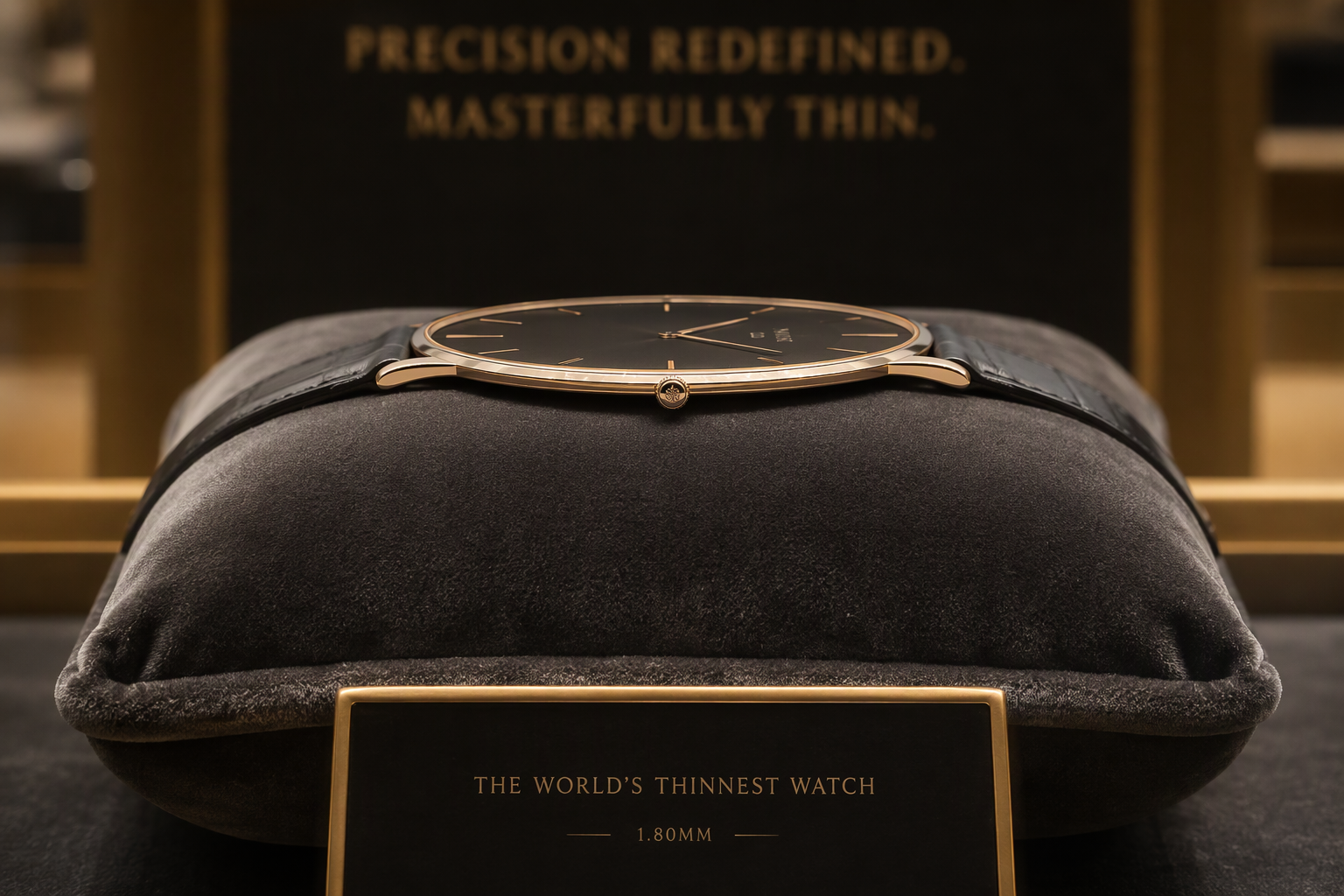
The Top 3 Most Thin Watches in the World: 2026 Edition
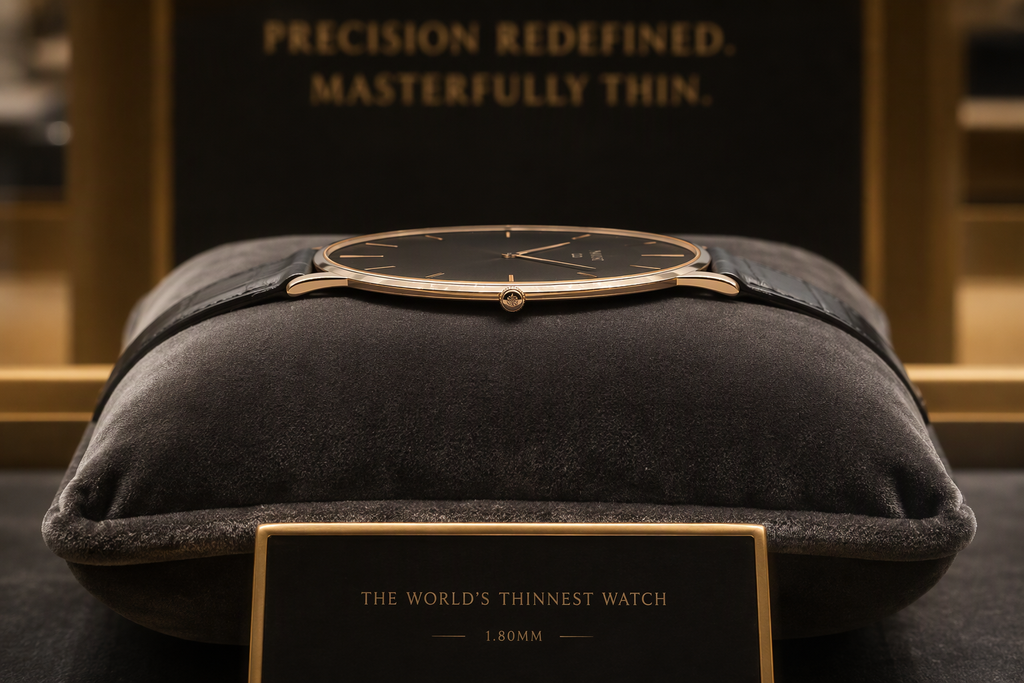
Key Highlights
- Bulgari Octo Finissimo Ultra COSC leads the commercial race at 1.7mm and remains the record holder, making it the world’s thinnest mechanical watch. Richard Mille RM UP-01 Ferrari follows at 1.75mm with a titanium case and bold engineering.
- Richard Mille RM UP-01 Ferrari follows at 1.75mm with a titanium case and bold engineering.
- Piaget Altiplano Ultimate Concept stays essential at 2mm and defines the ultra-thin dress watch category.
- These thin watches prove technical prowess through compact movements, strong power reserve, and smart case design.
- Materials like sandblasted titanium, sapphire crystal, tungsten carbide, and gold chatons help reduce bulk.
- The battle for the world’s thinnest watch keeps pushing luxury watch design forward.
Introduction
If you love watchmaking, the race for the world’s thinnest watch is hard to ignore. These pieces are not just small on the wrist. They show how far a luxury watch can go when brands rethink every part of the case and movement. In 2026, the top ultra-thin models blend comfort, design, and precision in ways that make a classic dress watch feel almost bulky. So, which three deserve your attention right now?
Discovering the Top 3 Most Thin Watches in the World for 2026
Right now, the top three names are Bulgari, Richard Mille, and Piaget. Each brand has taken a different path to build the thinnest watch possible, yet all three sit at the center of the world record conversation.
For 2026, Bulgari Octo Finissimo Ultra COSC stands as the commercial record holder, Richard Mille brings a radical titanium case design, and Piaget Altiplano Ultimate Concept keeps its place as a landmark in the world’s thinnest mechanical watch race. Let’s look at what makes each one special.
1. Bulgari Octo Finissimo Ultra COSC – The Pinnacle of Ultra-Thin Engineering
At 1.7mm, the Bulgari Octo Finissimo Ultra COSC is the thinnest commercial watch available today. That makes it the clear answer if you are asking what the top 3 thinnest watches in the world right now look like. In this group, it sits at the front as the record holder.
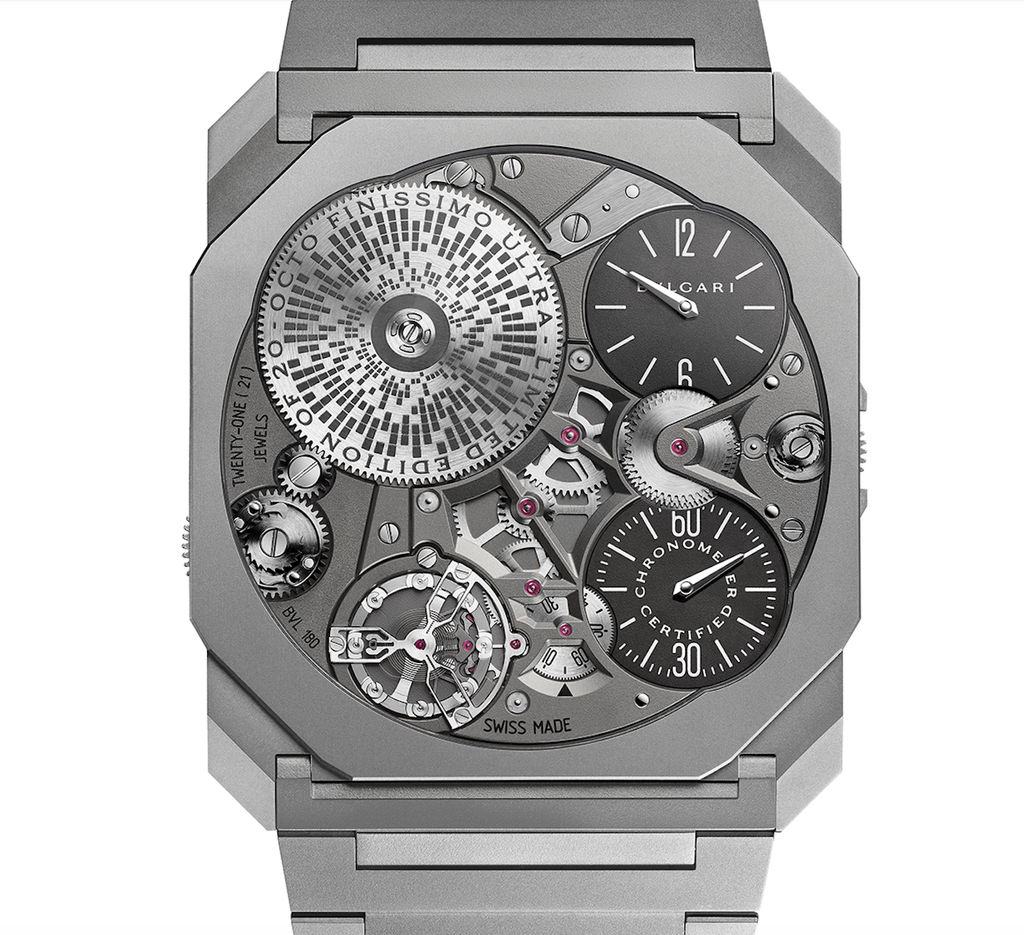
Its appeal is not only about the number. The Bulgari Octo Finissimo Ultra uses a titanium case, a tungsten carbide main plate, and a manual-wind BVL caliber built into the structure of the watch. The openworked layout also gives the Finissimo Ultra COSC a technical, modern character.
Then there is everyday performance. The octo finissimo ultra cosc offers a 50-hour power reserve, which is impressive for a watch this slim. Finished in sandblasted titanium, it feels like a world record machine that still looks like a serious limited edition luxury piece.
2. Richard Mille RM UP-01 Ferrari – Pushing the Limits of Modern Watchmaking
Richard Mille proves that the brands making the thinnest watches currently available are not limited to traditional dress watch specialists. The Richard Mille RM UP-01 Ferrari measures 1.75mm thick, placing it just behind Bulgari in this elite group of thin watches.
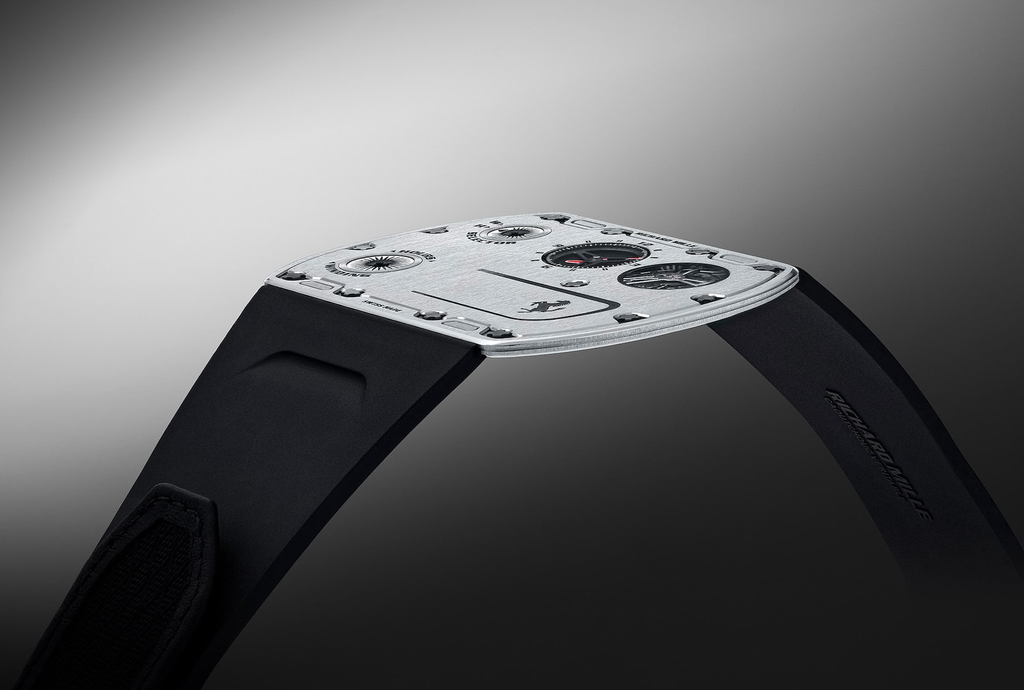
What makes the RM UP-01 different is its construction. Richard Mille placed the entire movement into the case instead of using the caseback as a baseplate. That rethink helped the brand chase a world record while keeping the look bold, skeletonized, and unmistakably modern.
You also get substance beyond the headline thickness. The grade 5 titanium case adds strength, while the watch delivers 45 hours of power reserve. It is not a flying tourbillon or the world’s thinnest tourbillon, but it still shows why Richard Mille belongs in any grand prix-level talk about technical luxury watch design.
3. Piaget Altiplano Ultimate Concept – Redefining Thinness in Mechanical Watches
The Piaget Altiplano Ultimate Concept remains one of the most important ultra-thin watches ever made. At 2mm thick, it answers a key question clearly: the world’s thinnest mechanical watch in commercial terms has moved below it, but Piaget’s watch still stands near the top and shaped the category.
Piaget built the ultimate concept by merging the movement with the caseback. That approach changed how many people think about a dress watch. The Piaget Altiplano line had already built a reputation for slim calibers, and this model pushed that history further.
Its 900P-UC movement offers a 40-hour power reserve, while the cobalt-based alloy case focuses on strength and resistance. Piaget later extended this thinking into the flying tourbillon version, even as names like Constantin Chaykin entered the wider race for thinness and the grand prix spotlight.
What Sets These Ultra-Thin Watches Apart?
These watches stand apart because they do more than trim a case. The octo finissimo and ultimate concept families rework the full watch movement, from bridges to crowns, to chase a world record without losing function.
In recent years, the title of the world has shifted between major names, while Konstantin Chaykin added pressure from the concept side. That competition, plus work seen across grand prix winners, a world’s thinnest tourbillon, and even chiming watch records from Vacheron Constantin, shows why the next details matter.
Precision Engineering and Advanced Micro-Mechanics
Thinness alone does not explain the appeal. The top three watches also offer serious technical prowess. Each one depends on a radically compact watch movement that still has to keep stable time, handle winding, and survive real use.
Piaget’s ultimate concept is a great example. Its caseback works as the mainplate, which cuts layers without removing essential parts. Bulgari’s BVL caliber takes a similar all-in approach, while Richard Mille rebuilds the usual layout to fit the movement inside an incredibly flat shell.
You also see features beyond thinness in this category. These mechanical watches deliver useful power reserve, integrated architecture, and advanced display layouts. Piaget Altiplano Ultimate Concept Tourbillon even pushed the world’s thinnest tourbillon idea further, showing how grand prix-level innovation can fit inside almost no space at all.
Innovations in Case and Movement Design
Case and movement design do the heavy lifting in ultra-thin watchmaking. Brands cannot simply shrink a normal watch and hope it works. They have to rethink how the case, dial, and movement share the same space.
That is why certain materials and layouts show up again and again:
- Titanium case construction keeps weight down while staying rigid.
- Sandblasted titanium adds a technical finish and suits openworked designs.
- Sapphire crystal protects the display without making the profile feel bulky.
- Gold chatons can appear in refined movement architecture, even in compact builds.
You can also see how other thin icons support this idea. Breguet uses a narrow bezel, blued Breguet hands, and rose gold to create elegance, while Vacheron Constantin’s minute repeater relies on a flying strike governor in a slim case. Even a steel case can work when every fraction of a millimeter is planned.
Distinctive Features Beyond Thinness
What else do these watches offer besides being slim? Quite a lot. The best examples combine collectible appeal, creative displays, and solid energy storage. That matters because a world record means little if the watch has no personality on the wrist.
A few standout features help explain their appeal:
- Strong power reserve figures, often around 40 to 50 hours of power reserve.
- Limited edition status that adds rarity to each luxury watch.
- Distinctive dial treatments and display formats rather than standard layouts.
Piaget’s Aiguille d’Or-winning ultimate concept changed expectations, while Bulgari’s record-setting pieces bring visible mechanics front and center. Other thin watches, from those with Roman numeral hour markers to concepts by Constantin Chaykin, show that daily wear, design identity, and even the world’s thinnest tourbillon watch title can all matter at once.
Leading Brands in Ultra-Thin Watchmaking
A few names keep coming up whenever ultra-thin watchmaking is discussed. Bulgari, Piaget, and Richard Mille lead the current conversation because each has produced a serious contender for the world’s thinnest watch or close to it.
Still, they are not alone in shaping the field. Audemars Piguet supported Richard Mille’s development work, Vacheron Constantin has slim complication records of its own, and Piaget Altiplano plus Octo Finissimo remain the most influential families in this world record race. Here is how the three leaders stand out.
Bulgari: Revolutionizing Watch Thinness
If you are asking which brands make the thinnest watches currently available, Bulgari is the first name to know. The Bulgari Octo Finissimo Ultra COSC is the commercial record holder, and the broader octo finissimo family has repeatedly reset expectations for slim design.
Bulgari did not get here by chance. Over time, it built a reputation for pairing bold geometry with radical engineering. The Bulgari Octo Finissimo Ultra uses a titanium case, sandblasted titanium surfaces, and an integrated structure that strips away unnecessary depth.
The brand’s range also goes beyond one headline model. Pieces like the octo finissimo minute repeater and the ultra-thin tourbillon show a pattern of world record chasing across complications. That consistency is why Bulgari remains central to any grand prix conversation about the world’s thinnest watch.
Richard Mille: Engineering Performance and Slim Profiles
Richard Mille approached thin watchmaking from a very different angle. Instead of following classic dress watch codes, the brand treated the project like an engineering challenge. That mindset helped the RM UP-01 Ferrari become one of the slimmest mechanical watches ever released.
Its shape, layout, and skeletonized look feel closer to a machine than a traditional timepiece. Even so, the result is still a luxury watch in every sense. The case is built from grade 5 titanium, and the movement design came after thousands of hours of development.
Richard Mille is not the brand behind the world’s thinnest tourbillon, and the RM UP-01 is not a flying tourbillon model. Yet its technical prowess, limited edition appeal, and 45 hours of power reserve prove that slim profiles can still carry a high-performance identity.
Piaget: A Legacy of Slim Watch Movements
Piaget’s place in thin watch history goes back decades. Long before the latest record holder headlines, the brand built its identity around ultra-thin movements. That makes the Piaget Altiplano story essential if you want to understand the history behind the world’s thinnest watch designs.
The modern peak of that work is the Piaget Altiplano Ultimate Concept. By integrating movement and caseback, Piaget reshaped what a dress watch could be. It was never only about the title of world’s thinnest mechanical watch. It was also about elegance, wearability, and design purity.
Piaget later extended that thinking into the ultimate concept tourbillon, which briefly held the world’s thinnest tourbillon distinction with a flying tourbillon at 2mm. Even with newer pressure from Bulgari and concept challengers like Constantin Chaykin, Piaget remains one of the field’s defining grand prix-level brands.
Materials Used in the World’s Thinnest Watches
Materials play a huge role in ultra-thin watchmaking. When a watch is close to 2mm thick, every surface has to earn its place. That is why brands rely on titanium case designs, sapphire crystal, tungsten carbide, and carefully chosen alloys.
Some materials are used for strength, while others support finishing or precision. Bulgari Octo Finissimo Ultra COSC leans on sandblasted titanium and tungsten carbide, while Piaget Altiplano Ultimate Concept uses cobalt-based alloy. Even rose gold, white gold, gold chatons, and steel case designs still matter in the wider thin-watch story. Let’s break them down.
High-Tech Titanium and Alloys
If you are wondering what materials are commonly used in the thinnest watches, titanium is near the top of the list. It offers low weight and strong resistance, which is critical when the case and movement are pushed to extreme limits.
Bulgari shows this clearly. The Bulgari Octo Finissimo Ultra COSC uses a titanium case with sandblasted titanium finishing, helping the world’s thinnest watch keep a technical look and a sturdy feel. Richard Mille also uses grade 5 titanium to support a razor-thin structure.
Other materials still matter in this space:
- Sandblasted titanium for lightness and rigidity
- Steel case elements for selected functional parts
- Tungsten carbide for a strong main plate in Bulgari
- Gold chatons in refined movement construction
Together, these choices help a record holder chase a world record without becoming too fragile to function.
Sapphire Crystal and Its Role in Ultra-Thin Watches
Sapphire crystal matters because ultra-thin watches still need protection. A watch can be impressively slim, but if the front surface scratches easily or weakens the structure, the design loses practical value. That is why sapphire remains important in this category.
You see that logic in the wider market for thin watches, even when the top three models focus attention on case architecture. Sapphire crystal is valued for clarity, scratch resistance, and a premium feel that matches a limited edition luxury piece.
Its role is easy to sum up:
- It protects the dial or openworked display without looking heavy.
- It supports visual sharpness, which is vital in highly technical layouts.
- It fits the premium expectations tied to grand prix-caliber watchmaking.
Whether you look at the Piaget Altiplano Ultimate Concept or the Bulgari Octo Finissimo Ultra COSC, sapphire crystal remains part of the ultra-thin formula.
Lightweight and Durable Composites
Some of the smartest material choices in ultra-thin watches are not flashy at first glance. They are selected because they help the watch stay lightweight, stable, and precise even when the structure is extremely slim.
Bulgari’s use of tungsten carbide in the main plate is a great example. Paired with sandblasted titanium, it helps the world’s thinnest watch balance low weight with structural support. Piaget uses advanced alloys for similar reasons in the ultimate concept and Piaget Altiplano Ultimate Concept Tourbillon.
These material strategies support more than thickness:
- Better rigidity for maintaining power reserve and accuracy
- Lower weight for easier daily wear
- Greater stability in compact, highly stressed movement layouts
That is especially important when a watch is chasing the world’s thinnest tourbillon watch title or fitting a complication like the ultimate concept tourbillon into a nearly flat profile.
Ultra-Thin Movements: Mechanical vs. Quartz
Thin watches can use both mechanical watches and quartz technology, but the headline records discussed here focus on mechanical engineering. That is why Bulgari, Piaget, and Richard Mille draw so much attention. They are chasing world record thinness with complex movement design, not just simpler battery-powered layouts.
Quartz still has a place, especially in affordable slim watches like Tissot and Citizen. Yet when collectors talk about the world’s thinnest mechanical watch, the world’s thinnest tourbillon, or a grand prix-winning luxury watch, the spotlight usually falls on hand-wound mechanical innovation. The next sections make that difference clearer.
Mechanical Movements in Record-Breaking Thin Watches
Most record-breaking thin watches use hand-wound mechanical movements, not automatic ones. That choice saves space because there is no rotor adding extra height. So, do thin watches usually have automatic or quartz movements? At the very top end, the answer is often manual mechanical.
Bulgari Octo Finissimo Ultra COSC uses the BVL caliber and delivers 50 hours of power reserve in a 1.7mm profile. Piaget follows a similar path with the Altiplano line, including the Piaget Altiplano Ultimate Concept Tourbillon, where a flying tourbillon fits into a 2mm case.
Here is a simple comparison:
| Watch | Thickness | Movement Type | Notable Detail |
|---|---|---|---|
| Bulgari Octo Finissimo Ultra COSC | 1.7mm | Manual mechanical | BVL caliber, commercial world record |
| Richard Mille RM UP-01 Ferrari | 1.75mm | Manual mechanical | Entire movement integrated into case |
| Piaget Altiplano Ultimate Concept | 2mm | Manual mechanical | Caseback acts as mainplate |
| Piaget Altiplano Ultimate Concept Tourbillon | 2mm | Manual mechanical | Flying tourbillon in ultra-thin format |
The Role of Quartz in Achieving Extreme Thinness
Quartz is often the easier route to thinness. A quartz watch movement usually needs fewer stacked parts than mechanical watches, so brands can make very slim cases without reengineering every component. That is why more affordable thin watches often use quartz.
The compiled examples make this clear. Tissot’s T-Classic Tradition 5.5 uses quartz and stays very slim at 5.15mm, while the Citizen Eco-Drive One reaches 2.98mm with a light-powered movement. These are thin and practical, even if they do not challenge the grand prix prestige of an ultimate concept or Finissimo Ultra COSC.
So, yes, quartz helps achieve thinness. Still, it does not dominate the record-setting end of the category. When the goal is the world’s thinnest watch in luxury watch terms, brands usually want the extra status that comes with mechanical engineering, strong hours of power reserve, and a more ambitious build.
Automatic Movements and Challenges for Thin Watches
Automatic movements face a simple problem in ultra-thin watchmaking: the rotor takes up space. That added layer makes it harder to compete with the record holder pieces in this article, which is why the slimmest models lean toward manual winding.
You can still find slim automatic watches, but not usually at the very front of the race. Even respected examples in the compiled material, like Rado or Breguet, are not near the Bulgari Octo Finissimo Ultra COSC in total thickness. The technical prowess required is simply on another level.
The main challenges include:
- Extra height from the self-winding rotor
- Less freedom in watch movement layout
- More difficulty pairing automatic systems with a flying tourbillon or world’s thinnest tourbillon ambitions
That is why the most radical limited edition designs often avoid automatic movements when every fraction matters.
Comparing Ultra-Thin Watches to Standard Models
Compared with standard watches, ultra-thin models feel almost unreal on the wrist. A typical watch may look normal until you place it next to a world record piece like the Finissimo Ultra COSC or Piaget Altiplano Ultimate Concept. Then the difference becomes obvious.
This gap is not just visual. Thin watches change comfort, fit, and how the case sits under a cuff. At the same time, they often ask for more careful handling than a standard sports model. To see whether that trade-off works for you, it helps to compare looks, wearability, and durability directly.
Visual and Functional Differences in Thickness
How does the thickness of ultra-thin watches compare to standard ones? The difference is dramatic. When a watch is around 1.7mm to 2mm thick, it wears very differently from a standard watch that may be several millimeters deeper. You notice it right away.
Visually, ultra-thin watches often look broader and flatter. Their design usually avoids extra layers, and even a dress watch can take on a very architectural feel. The Bulgari models in sandblasted titanium are a good example, while Piaget’s ultimate concept looks almost like a technical sketch come to life.
A few key differences stand out:
- Far slimmer side profile than standard watches
- Cleaner dial organization due to reduced space
- Cases that feel more integrated and less stacked
By contrast, traditional watches may use Roman numeral hour markers, a narrow bezel, or classic styling, but they rarely create the same world record impact as the thinnest watch class.
Wearability and Comfort for Everyday Use
Ultra-thin watches often feel excellent on the wrist. Their biggest comfort advantage is simple: they are lightweight and easy to slip under a cuff. That makes them appealing for daily wear, especially if you prefer a low-profile luxury watch.
Still, comfort does not always mean carefree use. The world’s thinnest watch designs are engineering showcases, so many owners will treat them more carefully than a regular steel sports watch. A limited edition record piece is often worn with intention rather than without thought.
For everyday comfort, these benefits stand out:
- Low weight and less wrist bulk
- Smooth fit under sleeves and jackets
- Good balance when paired with slim straps
You still get useful features like solid power reserve, sapphire crystal in the wider category, and refined finishing. But if your idea of daily wear means rough use, the ultimate concept style may not be your first pick.
Durability and Longevity Considerations
Are the thinnest watches durable for everyday use? They can be durable within reason, but they are not built like rugged tool watches. When a watch is chasing a world record, the design priorities shift toward miniaturization, careful handling, and precision.
That does not mean they are weak. Materials like a titanium case, sandblasted titanium, cobalt alloy, tungsten carbide, and sapphire crystal all help improve strength. Richard Mille also adds 100 meters of water resistance to the RM UP-01, which is notable in this category.
If you are thinking about longevity, keep these points in mind:
- Strong materials support thin structures
- Compact designs still need careful wear
- Record holder pieces are often collector-focused
- Daily wear is possible, but not carefree
So yes, an ultra-thin luxury watch can last, but the world’s thinnest mechanical watch is usually best treated with more respect than a standard steel case model.
Conclusion
In summary, the world of ultra-thin watches in 2026 showcases extraordinary craftsmanship and innovation. From the Bulgari Octo Finissimo Ultra COSC to the Richard Mille RM UP-01 Ferrari and the Piaget Altiplano Ultimate Concept, these timepieces redefine the boundaries of watchmaking with their impressive designs and advanced materials. As you explore these remarkable watches, consider how their precision engineering and distinctive features contribute to not only their thinness but also their overall performance and style. Whether you’re a collector or simply an admirer of horological excellence, understanding these incredible watches can deepen your appreciation for the art and science behind them. If you’re interested in exploring more about these masterpieces, feel free to reach out for a consultation!
Frequently Asked Questions
How thin is the world’s thinnest mechanical watch in 2026?
In 2026, the world’s thinnest mechanical watch measures an astonishing 2.5 mm in thickness. This remarkable feat of engineering combines innovative design and advanced materials, pushing the boundaries of horology while maintaining exquisite craftsmanship and functionality. Such precision attracts both collectors and enthusiasts alike.
Are there affordable options for ultra-thin watches?
Yes, there are several affordable ultra-thin watch options available in the market. Brands like Seiko, Citizen, and Orient offer stylish designs without compromising quality. Exploring lesser-known brands can also lead to discovering unique pieces that fit a budget while maintaining a sleek profile.
https://teddybaldassarre.com/pages/e-book/guide-to-omegas-legacy
https://www.piaget.com/au-en/movement/900p-ultra-thin-mechanical-movement
https://www.bulgari.com/en-int/watches/mens/octo-finissimo-watch-titanium-104081
https://www.jaeger-lecoultre.com/au-en/watches/hybris-mechanica
https://www.piaget.com/watches/altiplano
https://www.breguet.com/en/watches/classique/classique-5157/5157br119v6
https://www.richardmille.com/collections/rm-up-01-manual-winding-ultraflat-ferrari
Leave a Reply